

16x25x1 Pure | MERV 7 Air Filter
- Fits standard 16x25x1 HVAC systems
- Helps trap dust, lint, pollen, and crud
- Steady airflow. No dirty air bypass drama.
- Subscribe before it gets gross
Finding the right HVAC air filter size might not sound exciting, but it plays a major role in how well your heating and cooling system works.
A properly sized filter helps maintain balanced airflow, keeps dust and allergens out of the air you breathe, and protects your HVAC unit from unnecessary strain.
Using the wrong size can lead to poor air quality, higher energy bills, and even long-term damage to your furnace or AC system.
Whether you're replacing an old filter, shopping for a new one, or just not sure what those numbers on the side of the filter mean, this step-by-step guide will help you figure out exactly what size you need, why it matters, and how to get it right the first time.
Step 1: Locate Your HVAC Filter
Before you can find your filter size, you need to locate where your air filter is installed. Most filters are found in one of these locations:
- Furnace: If you have a central heating system, your filter is likely located inside or next to the furnace unit. Furnaces are commonly found in basements, attics, garages, or dedicated utility closets.
- Return Air Vent: Some homes have air filters placed in large return vents, often located on walls, ceilings, or hallways. These vents pull air into the HVAC system to be heated or cooled.
- Air Handler Unit: If you have a split HVAC system, your filter may be inside the air handler, which is usually in a closet or attic.
If you’re unsure where to look, ask a family member who’s familiar with your home’s heating and cooling system - or check your HVAC user manual.

Step 2: Check the Existing Filter for Size
Most standard air filters have their dimensions clearly printed on the cardboard frame. Most filters are labeled using the standard width x length x depth format (example: 16x25x1). If you’re searching online, use this number to shop for replacement HVAC filters.
This nominal size (rounded for convenience) is what you’ll use when ordering a replacement filter. However, if exact measurements are needed, you can check the actual size—which is usually slightly smaller than the nominal size.
Homeowner’s [Pro HVAC Tip]: If your filter has a size printed on it, take a photo with your phone so you don’t forget it when shopping for a replacement. You can also store it in a folder on your phone so you aren’t endlessly scrolling to find it.

Step 3: How to Measure Your Filter Slot (If No Size is Listed)
If your old filter doesn’t have any size markings, you’ll need to measure it manually. Here’s how:
- Find a tape measure. (Trust us, it makes this process a lot easier.)
- Measure the width, length, and depth of the existing filter or filter slot.
- Round your measurements to the nearest inch to determine the nominal size.
Tip: If your measurements come out as 15 ¾ x 24 ¾ x ¾ inches, the correct filter size would be 16x25x1.

Step 4: Still Not Sure? Contact Yoor Air for Help
Still confused? No worries! Send a photo of your HVAC unit and filter slot to our support team. We’ll help you identify the correct air filter size for your system. Give us a call or fill out our contact form and we’ll guide you through the process of finding the perfect furnace filter size or AC filter size for your home.
Tip: If you’re having trouble, take a picture of your HVAC unit and filter slot before calling customer support. This can help them identify the right filter for your system.

Step 5: Choose the Right Filter for Your Home
Now that you know your size, choose the best air filter for your home’s needs. Filters come in different types based on efficiency (MERV rating) and air quality needs.
- Basic Filters (MERV 1-4): Good for airflow, but not great for dust or allergens capture.
- Standard Filters (MERV 5-8): Captures common household pollutants like dust, pollen, mold spores, and pet dander.
- High-Efficiency Filters (MERV 9-12): Ideal for allergy sufferers and homes with kids or pets. Many experts agree that most home systems should not use filters above MERV 12 unless it is a HEPA rated system.
- HEPA & Ultrafine Filters (MERV 13+): High Efficiency for trapping tiny airborne particles, but may restrict airflow in some HVAC systems.
Tip: If you have allergies or pets, consider a higher-efficiency filter to trap more airborne particles and improve air quality.
When to Change Your HVAC Filter (And Why It Matters)
Even the perfect filter won’t work forever. Over time, filters become clogged with dust, pollen, pet hair, and other airborne particles, making it harder for air to pass through.
When that happens, your HVAC system has to work harder to push/pull air through, which can lead to wear and tear, higher utility bills, and poor indoor air quality.
So how do you know it’s time to swap it out? Here are a few signs your filter might be overdue:
- You notice more dust collecting around vents or on furniture
- Your system is running longer than usual to reach the same temperature
- Allergy or asthma symptoms are flaring up indoors
- It’s been over 60–90 days since your last filter change
Still unsure? A quick visual inspection can help. If the filter looks gray or dusty, it’s time for a fresh one.
How Often Should You Replace Your Filter?
If you have pets, allergies, or live in a particularly dusty area, changing your filter every one to two months is recommended. For most households with standard HVAC usage, replacing the filter every two to three months is sufficient.
If you rarely use your heating or cooling system or always have windows shut when running the systems, you may only need to replace the filter up to every six months. To stay on track, write the replacement date on the filter or set a calendar reminder every 30–60 days.
Why the Right Filter Size Is Critical
You might be thinking, “How do I know what size air filter I need?” and “What happens if I use the wrong size?” Here’s why it’s crucial to get the correct fit.
A filter that is too small leaves gaps, allowing unfiltered air to bypass the system and circulate contaminants. This small gap can decrease your filters MERV rating by up to 2 ratings. Now your cheap MERV 4 is actually a MERV 2. A filter that is too large won’t fit properly and may get crushed when installed, reducing its effectiveness or possibly collapse entirely.
Risks of the wrong filter size:
- Gaps that let dirty air bypass the filter can decrease MERV rating
- Filter gets crushed or bent during installation
- Reduced airflow = higher energy bills
- Extra strain on your system = shorter HVAC lifespan
An improperly fitted filter can also restrict airflow, forcing your HVAC system to work harder, increasing energy costs, and shortening the lifespan of the unit. Selecting the right furnace or AC filter size helps maintain proper airflow, improves indoor air quality, and ensures your system operates efficiently.
Final Air Filter Size Checklist
Before purchasing a new filter, make sure you have identified the location of your HVAC unit and filter slot or track, checked your current filter for size markings, or manually measured if no size is listed.
Be sure you know how often your filter needs to be replaced and are ready to choose a filter that best suits your home’s needs. With the right filter, you can enjoy cleaner air, a more efficient HVAC system, and a healthier home.
Found your size? Shop Yoor Air's Pure series of filters for better protection against dust, allergens, and airflow issues.
Bigger packs last longer and lower your cost per filter. Weirdly satisfying.
Not sure? Go every 3 months for regular homes, every 2 months for pets or odors, every 1 month if your house is basically a dust tornado.
Description
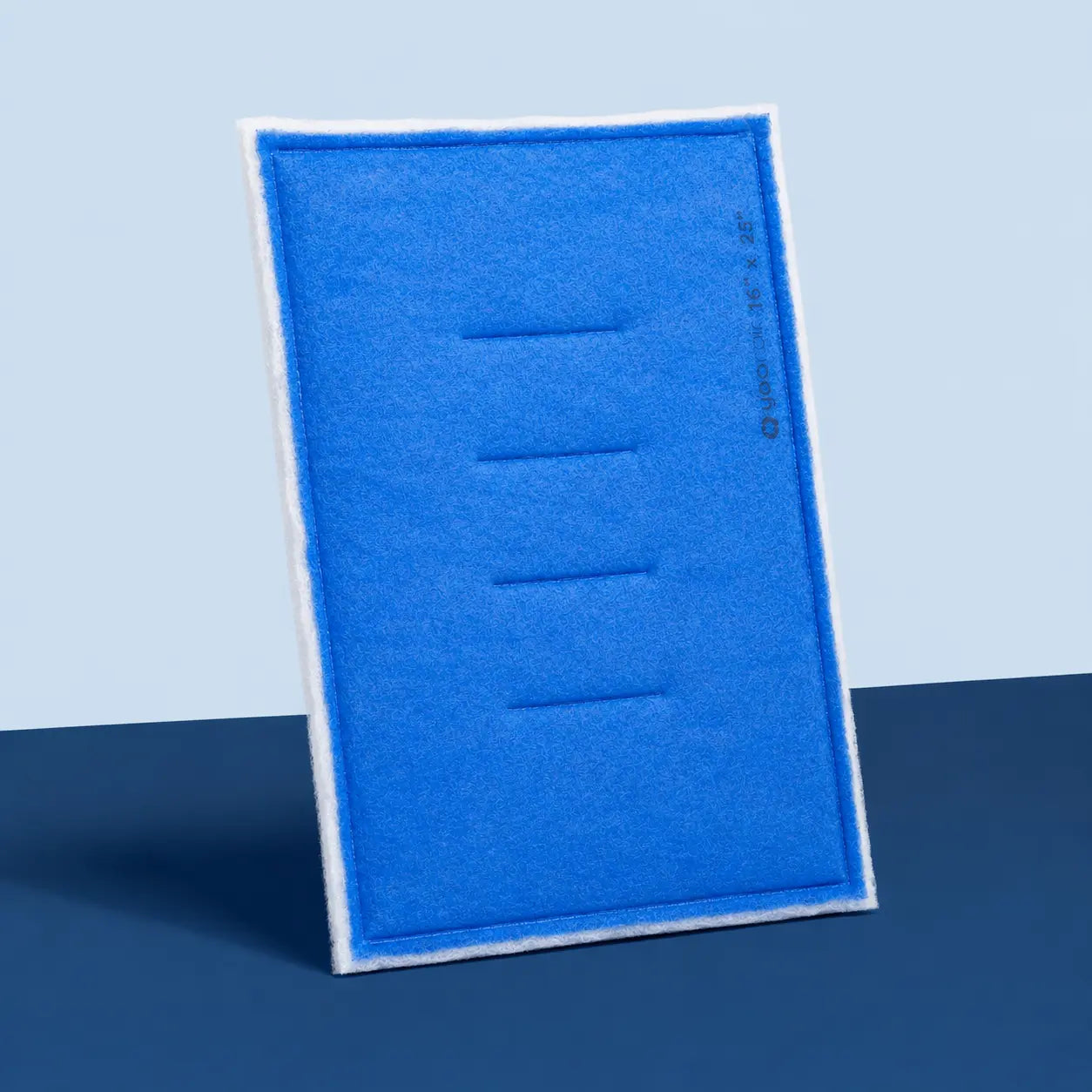
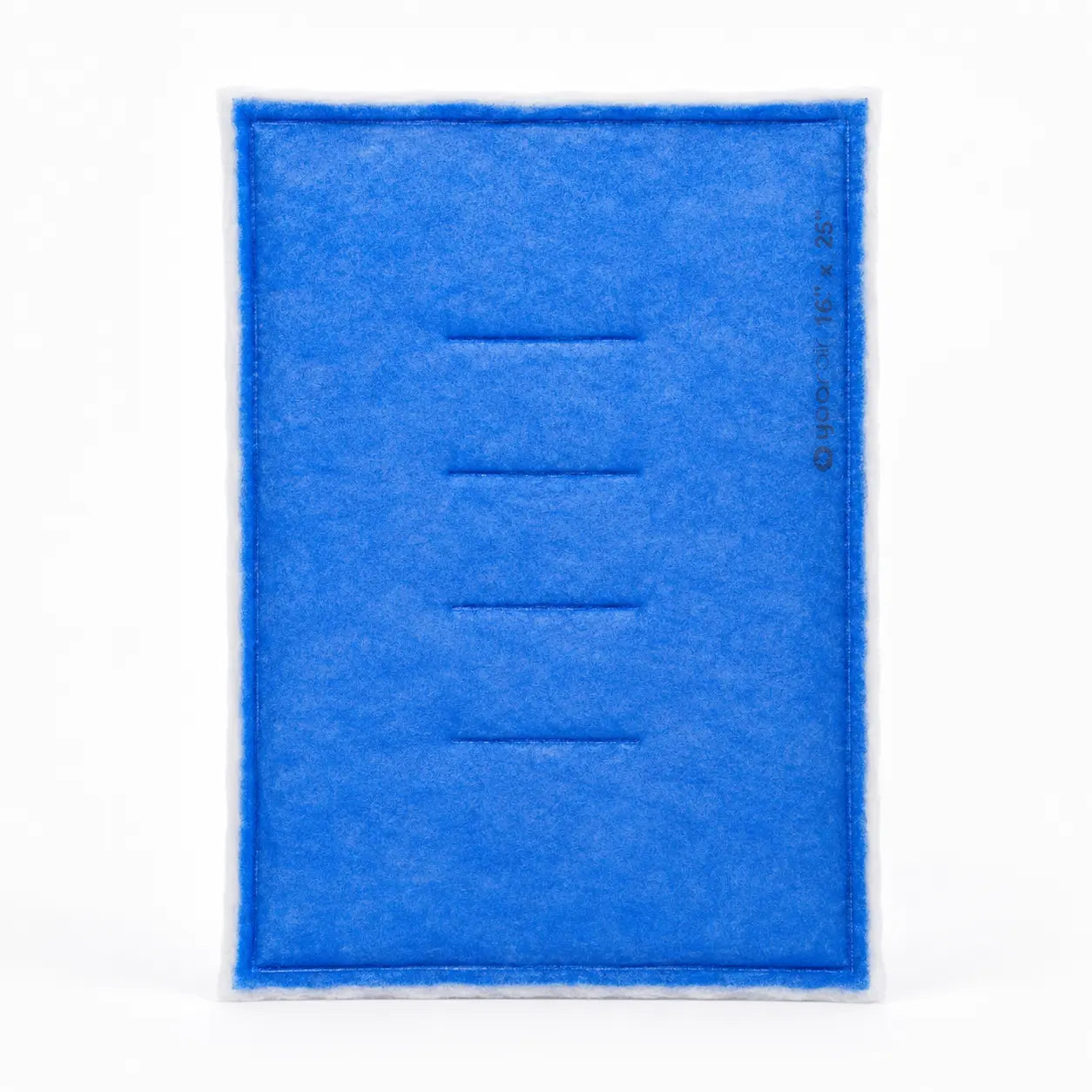
The 16x25x1 Pure Air Filter is our everyday 2-ply filter for compatible furnace, AC, HVAC, and return-air systems. It helps capture common household junk like dust, lint, pollen, and larger airborne particles before they keep looping through your home like they pay rent.
Pure is built for simple, reliable filtration and steady airflow. No overcomplicated filter theater. No mystery media pretending it went to college. Just a solid replacement filter made to sit snug, catch the crud, and help your HVAC system breathe without sucking dirty air around the edges.
Choose a pack size from 1 to 12 filters based on how often your system runs, how dusty your home gets, and how honest you’re being about remembering filter changes. Or subscribe and let fresh filters show up before your old one turns into a gray little shame square.
Size matters. Especially when dirty air is trying to sneak around the sides.
Product Specs
- Product Name: Pure Air Filter
- Filter Size: 16x25x1
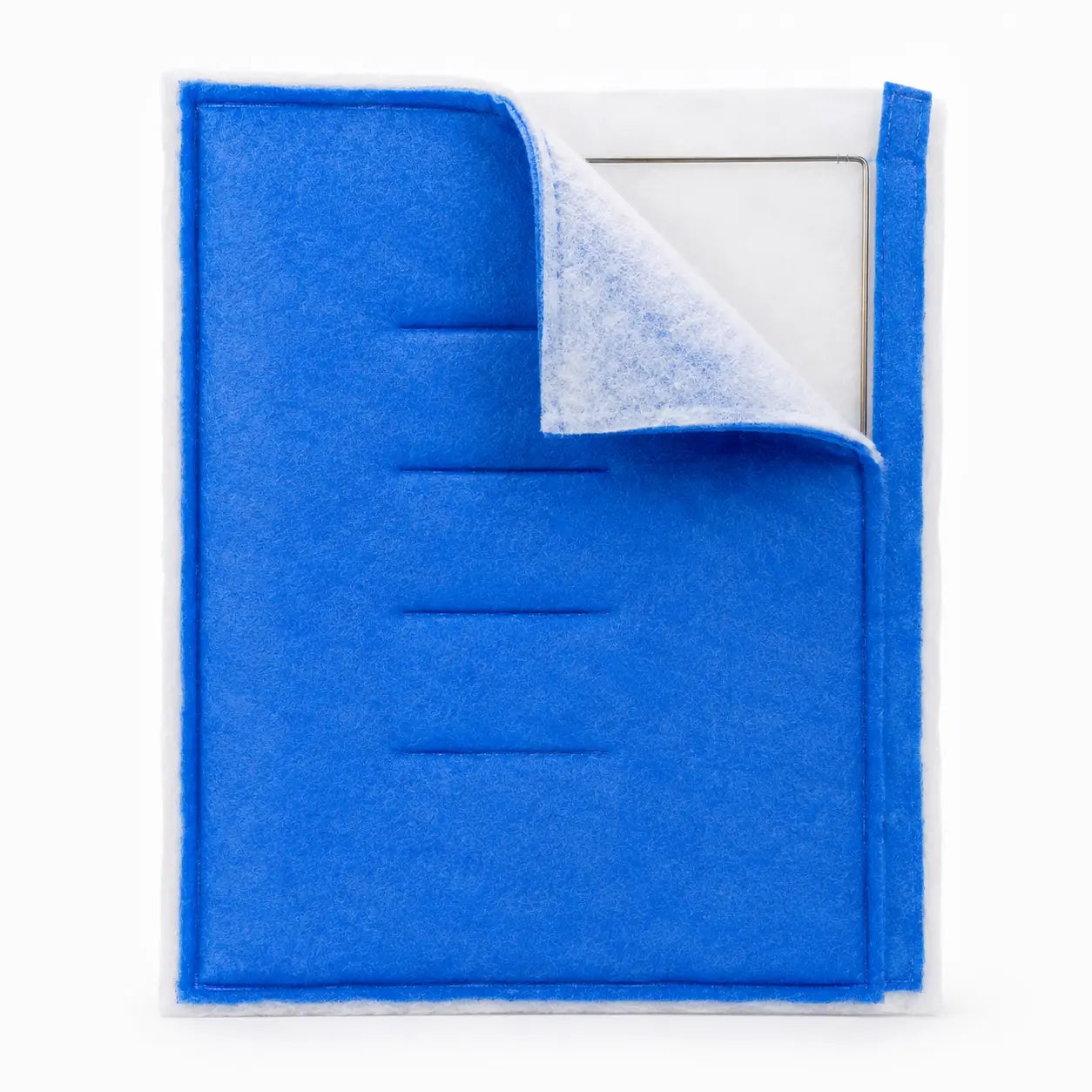
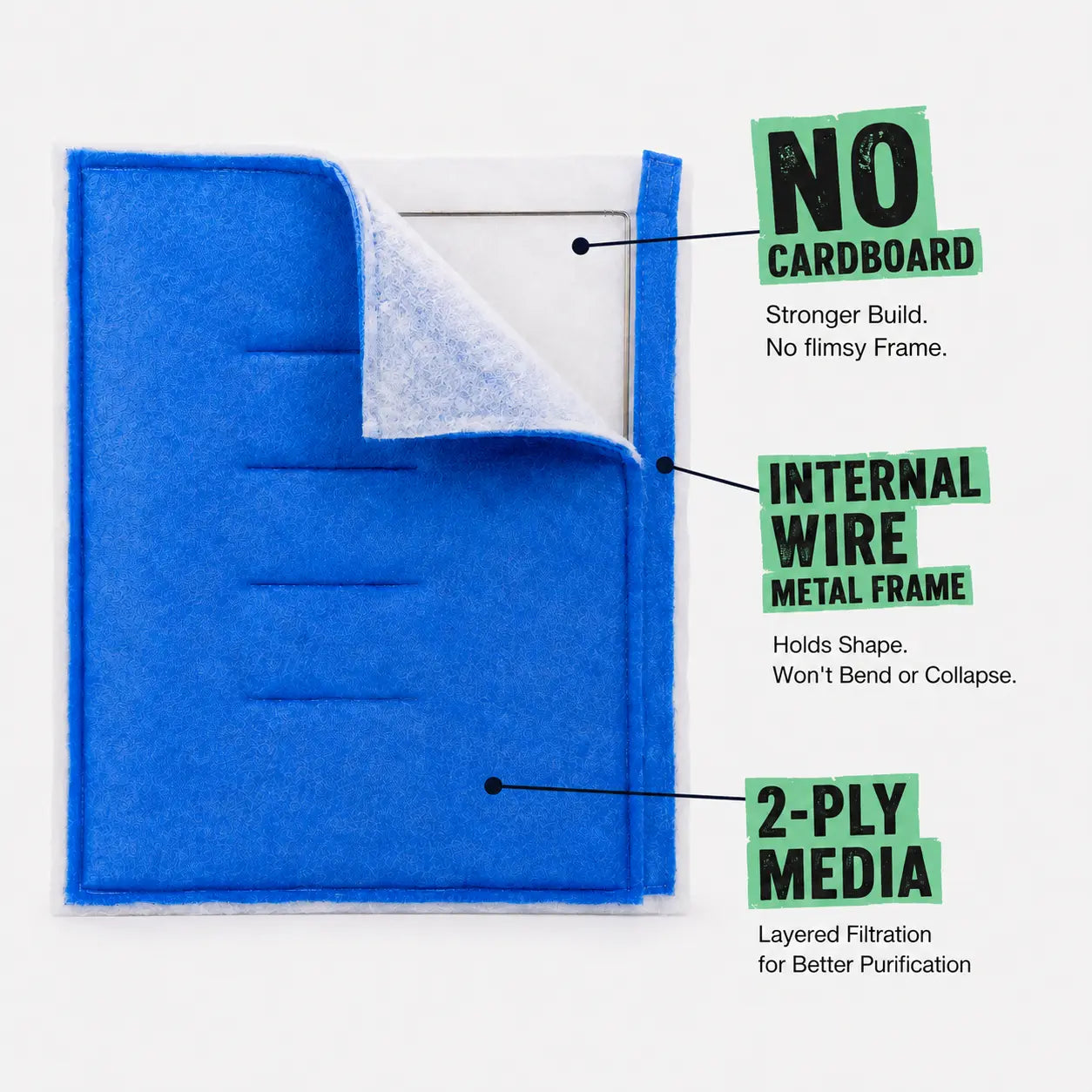
- Filter Construction: Synthetic Fiber Matrix w/ Internal Wire Frame
- MERV Rating: 7
- Initial Resistance: 0.20” W.G. @ 295 FPM
- Dust Arrestor: Light Tackifier (Non-Migrating Adhesive Coating)
- Best For: Homes with dust, pollen, dander, allergies, lint, and people who are tired of crappy filters
- Helps Capture: Dust, lint, pollen, mold spores, dust mite debris, textile fibers, everyday household debris, and other common airborne particles
- Compatible Systems: Furnace, AC, HVAC, and return-air systems
- Pack Sizes: 1-12 filters
- Purchase Options: One-time purchase or subscription
- Recommended Use: Routine residential filter replacement
- Replacement Cadence: Every 1-3 months depending on home, system use, dust, and pets
Pure vs Pure Plus vs Pure Carbon
Pure
- Best for everyday dust protection
- Choose this if you want simple, reliable filtration for regular home maintenance, steady airflow, and fewer dusty little freeloaders floating around.
Plain English:
Pure is the everyday workhorse. It handles dust, lint, pollen, and routine crud without making your HVAC system work through unnecessary drama.
Pure Plus
- Best for stronger household filtration
- Choose this if you want more filtration power for dust, pollen, and everyday airborne debris.
Plain English:
Pure+ is for homes that need a little more muscle with added Supertack tackifier. More capture power, still homeowner-friendly, still not a boring cardboard rectangle pretending it’s special.
Pure Carbon
- Best for odor control plus dust capture
- Choose this if you have pets, cooking smells, stale air, or other nose crimes floating around your house.
Plain English:
Pure Carbon brings carbon filtration into the mix to help reduce everyday odors. Pet smells, cooking funk, stale air, mysterious basement vibes. You know the type.
Will This Fit My System?
This 16x25x1 Pure | MERV 7 Air Filter is made for compatible furnace, AC, HVAC, and return-air systems that use a 16x25x1 filter. Check the size printed on the frame of your current filter before ordering.
If it says 16x25x1 you’re in the right place.
If it says something else, don’t freestyle it. HVAC systems are picky little machines, and “close enough” is how you end up with dust sneaking around the filter like it owns the place.
Quick tip: Filter sizes are usually printed on the cardboard frame of your current filter. Check there first. Then order like a responsible adult.
Size matters. A filter that almost fits almost works, which is a cute way of saying dirty air may be sliding around the sides.
Stop Forgetting Your Filter Change
Subscribe once and stop pretending you’re going to remember filter day through sheer personal growth.
Choose your pack size, set your delivery schedule, and get fresh filters before the old ones turn into gray shame squares. Subscriptions make regular replacement easy, especially if your system runs often, you have pets, or your house collects dust like it’s training for something.
Suggested Delivery Schedule
- Every 1 month for heavy use, pets, extra dust, or high HVAC runtime
- Every 2 months for moderate use
- Every 3 months for regular home replacement
- Every 6 months if you’re stocking up and replacing manually
“I noticed the air felt cleaner fast. Way less dust floating around, and the filter actually fits like it’s supposed to.”
16x25x1 Pure | MERV 7 Air Filter

Your Filter Should Fit. Weird Concept, Right?
If your filter wiggles, dirty air is probably sneaking around it. Which means your fancy little filter might be letting unfiltered air blow right past the frame. Not ideal. Also... gross.
Yoor Air Pure is built for a tighter fit, so more air actually goes through the filter instead of taking the lazy route around it. That helps trap dust, lint, pollen, and airborne crud before it gets into your HVAC system and back into your home.
No gaps. No weak performance. No dirty air sliding in the back door.



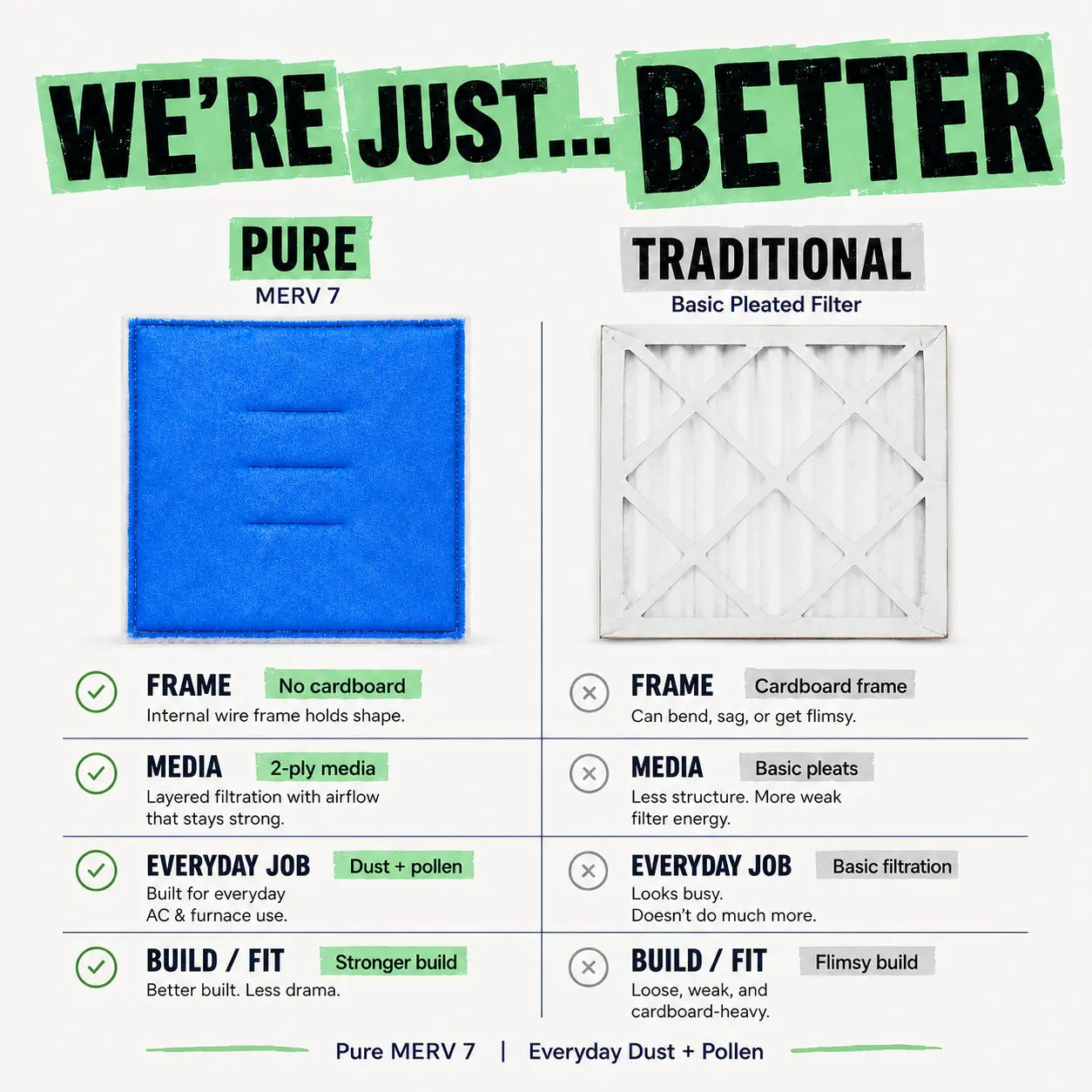
Floppy Cardboard? Embarrassing.
Traditional cardboard-framed filters can wiggle, bend, absorb moisture, collapse, and still somehow act like they deserve shelf space.
Yoor Air Pure is built differently. It uses stronger materials, smarter filter media, and a design that helps keep air flowing through the filter instead of leaking around it like your HVAC system has a dust side door.
Pure fits tighter, holds stronger, and does the dirty work without making a whole thing of it.
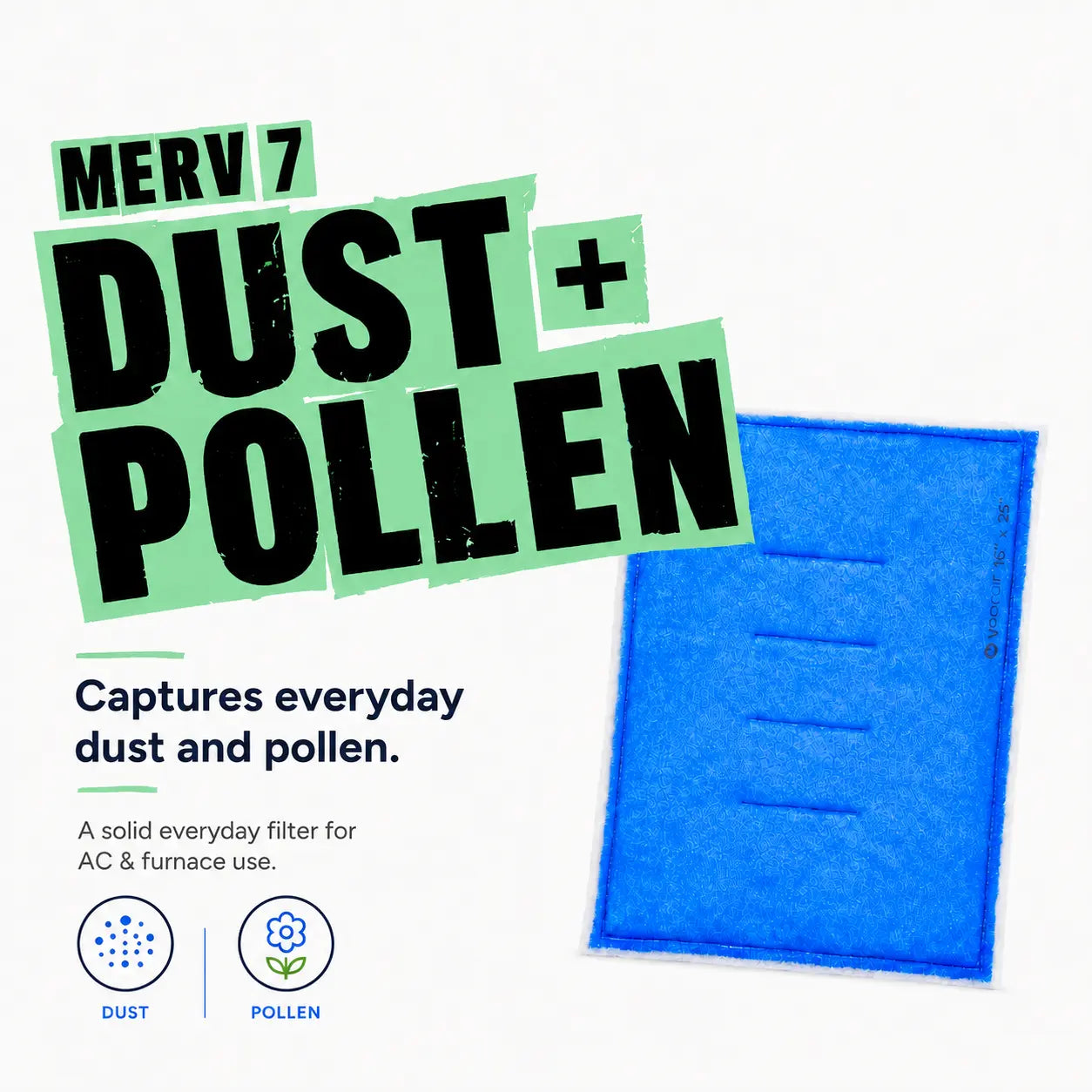
A regular pleated filter catches some particles. Pure captures everyday dust and pollen. Your home deserves something that knows how to perform under pressure.
| Feature | Yoor Air Pure | Traditional Cardboard Filter |
|---|---|---|
| Fit | Snug fit helps reduce dirty air bypass. | Can wiggle, gap, and let dirty air sneak around. |
| Frame | Internal rigid wire frame to withstand real HVAC conditions. | Cardboard can bend, sag, absorb moisture, and get sad. |
| Media | Synthetic matrix helps trap everyday dust, lint, pollen, and crud. | Often surface-loads and gives up faster than it should. |
| LIGHT TACKIFIER | A non-migrating adhesive coating to stop trouble before it gets into your system. | Anything that can get through or around is now airborne in your home. |
| Airflow | Designed for steady HVAC airflow. | Can whistle, chatter, collapse, or restrict unevenly. |
| Replacement | Available once or on subscription. | Replaced whenever someone finally remembers. |
| Vibe | Built like it gives a damn. | Floppy little dust rectangle. |
STOP LETTING DUST SNEAK IN THE BACKDOOR

Built to Catch the Junk Your Home Keeps Making
Your home is constantly making dust. Rude, but true.
Everyday air carries lint, pollen, dust, and mystery particles you definitely didn’t invite over. Our Pure air filter helps catch that junk before it keeps cycling through your furnace, AC, HVAC, or return-air system.
Because dust belongs in the filter. Not on your TV stand. Not on your shelves. Not doing laps through your vents like it owns the place.




Better for You. Better for Your Home. Built Better. Period.
Built to Last
Your furnace works hard. Your filter should too. Yoor Air filters are built with stronger materials that resist bending, sagging, and the limp cardboard nonsense that can leave your HVAC system working harder than it needs to.
Built with Purpose
Every part of a Yoor Air filter has a job to do. From the frame to the filtration media, we designed it to fit better, last longer, and help keep the junk where it belongs. In the filter. Not floating around your house.
Made for Real Homes
Life gets messy. Dust, pet hair, pollen, and everyday junk don't take days off. Our filters are built to handle real homes with a better fit and durable construction that helps keep your HVAC system doing its job.
Is It Time to Change Your Filter?
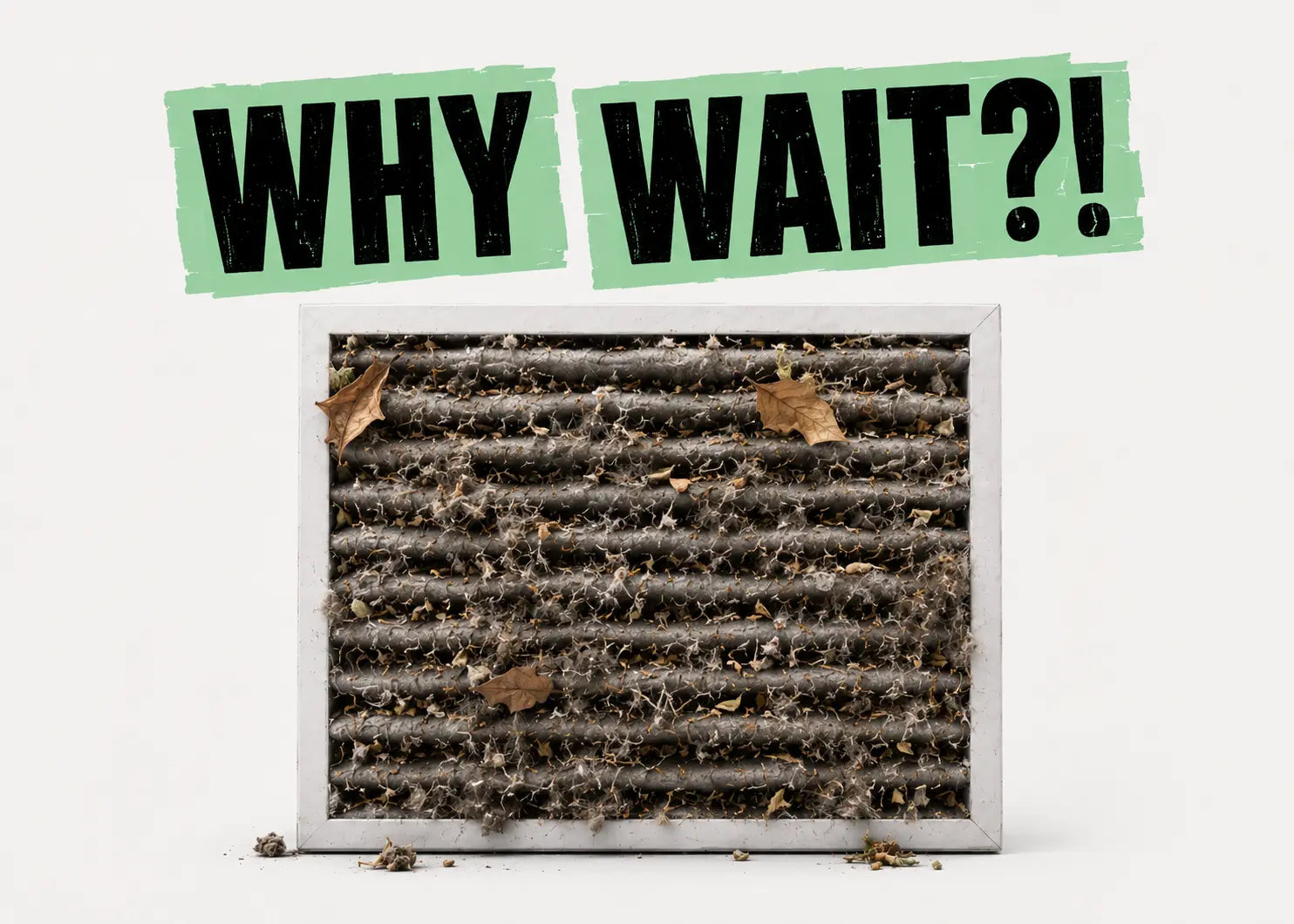
Probably. Industry standard suggests replacing your air filter every 90 days, but some homes make filters work harder. Pets, allergies, kids, dust, heavy HVAC use, and life in general can all speed things up.
If your filter looks like it was pulled out of a haunted lint trap, change it. If it’s gray, saggy, packed with dust, or giving the “I’ve seen things” kinda vibes, change it. Better yet, subscribe and let fresh filters show up before your old one becomes a crusty little shame rectangle.
Use the table below for your suggested filter replacement schedule.
| Home Situation | Suggested Replacement |
|---|---|
| Typical home use | Every 3 months |
| Sensitive air needs in the home | Every 6 weeks |
| Pets in the home | Every 2 months |
| Young children in the home | Every 2 to 3 months |
| Heavy HVAC use or extra dust | Every 1 to 2 months |
| Filter looks like a haunted lint trap | Change it now |

Size Matters. Yeah, We Said It.
A furnace filter that’s too small leaves gaps. Gaps let dirty air sneak around the sides.
Too big isn’t better either. Then you’re cramming a filter into your furnace like a maniac, crushing the frame, and messing with airflow.
Check your current filter size. Match the numbers. Slide it in snug. If it doesn’t fit, the dirt won't hit.
FAQs
How do I know if this is the right filter size?
Check the size printed on your current filter frame. If it says 16x25x1, you’re in the right place.
If it says anything else, don’t wing it. A filter that’s too small can leave gaps. A filter that’s too big can crush, bend, or block airflow. And once dirty air finds a gap, it’s slipping around the sides like it was invited.
Size matters. Measure first. Brag later.
What is the Yoor Air Pure filter best for?
Pure is best for everyday dust protection and routine residential filter replacement. It helps capture dust, lint, pollen, pet hair, and larger airborne particles moving through compatible furnace, AC, HVAC, and return-air systems.
It’s the simple, reliable option when you want cleaner airflow without overbuilding the situation. No filter cult. No weird science cosplay. Only a better everyday filter.
Can I use this filter in both my furnace and AC system?
Yes, if your furnace, AC, HVAC, or return-air system uses a compatible 16x25x1 filter.
Your heating and cooling system usually pulls air through the same return filter setup, but every home has its own little mechanical personality. Check your current filter size before ordering. Your HVAC doesn’t want a mystery size.
What does MERV 7 mean?
MERV is a rating system that measures how well a filter captures airborne particles.
A MERV 7 filter is made for everyday residential filtration. It helps capture common household particles like dust, lint, pollen, and larger airborne debris while supporting steady airflow in compatible systems.
Plain English: it catches the regular junk without turning your HVAC system into a drama queen.
How often should I replace my Pure air filter?
Replace Pure about every 1 to 3 months, depending on your home.
Change it more often if you have pets, extra dust, heavy HVAC use, nearby construction, or a filter that looks like it lost a fight in the basement.
A dirty filter can restrict airflow and make your system work harder. Nobody needs that kind of pressure.
Why does a tight fit matter?
Because dirty air loves a loose fit.
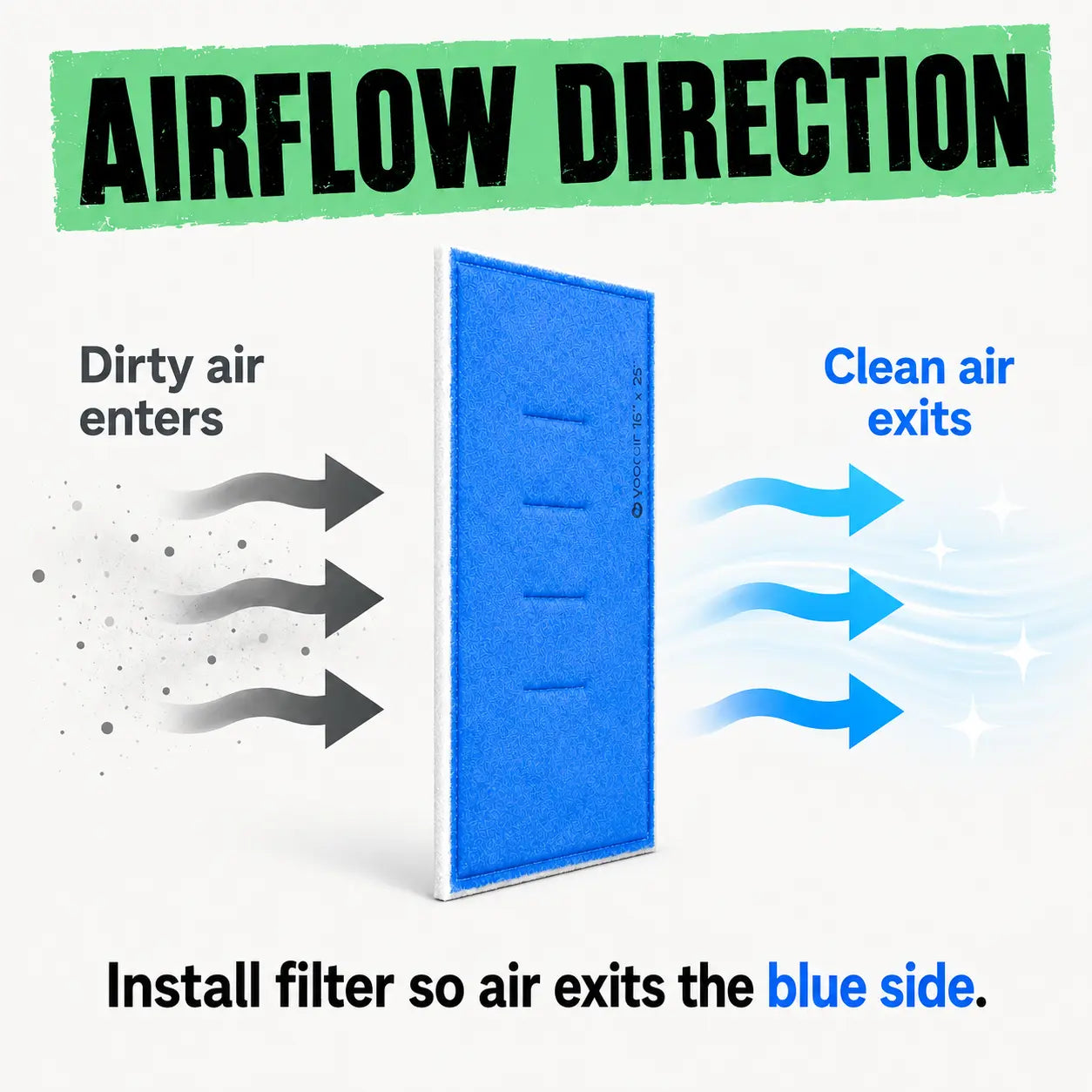
If your filter leaves gaps, air can move around the filter instead of through it. That’s called bypass air, which is basically unfiltered air sneaking past the media and heading right back into your home.
A snug fit helps reduce that dirty little shortcut. No gaps. No weak performance. No dusty back-door behavior.
Is Pure good for homes with pets?
Yes. Pure helps capture pet hair, dander, dust, and everyday airborne debris moving through your HVAC system.
It won’t stop your dog from shedding like it’s getting paid per hair, but it can help filter the evidence before it keeps circulating through your home. Love the pet. Filter the proof.
What’s the difference between Pure, Pure+, and Pure Carbon?
Pure is for everyday dust protection and routine filter changes. Pure catches the regular junk with its fiber matrix and light tackifier.
Pure+ gives you stronger household filtration for dust, pollen, and airborne debris. Pure+ brings more filtration muscle with added Supertack tackifier.
Pure Carbon Fiber matrix with a light tackifier adds carbon filtration to the to help with everyday odors from pets, cooking, stale air, and other nose crimes. Pure Carbon helps when your house smells like it’s keeping secrets.
Should I choose one filter or a larger pack size?
Choose one filter if you’re testing the fit or only need a quick replacement.
Choose a larger pack if you want a lower cost per filter and fewer emergency “crap, we’re out of filters” moments. Bigger packs last longer.
Can I subscribe to Pure filters?
Yes. You can subscribe and have fresh Pure filters delivered on schedule. It saves money, keeps replacement simple, and prevents your old filter from turning into a dusty shame rectangle while you pretend you’ll remember next weekend. No commitment. Cancel anytime. Fresh filters, less brain clutter.
A 16x25x1 air filter is a common size for residential furnace, AC, HVAC, and return-air systems. The Yoor Air Pure Air Filter is our everyday synthetic matrix filter for homeowners who want basic dust protection without trusting some flimsy cardboard thing that wiggles, sags, and acts like “close enough” is a filtration strategy. Pure helps trap dust, lint, pollen, pet hair, and larger airborne crud before it keeps cycling through your home like it pays the mortgage. It’s built for steady airflow, routine HVAC maintenance, and regular filter changes that don’t require a whole personality shift. Choose pack sizes from 1 through 12 filters, or subscribe so fresh filters show up before your old one turns into a gray little shame rectangle. Size matters. A filter that almost fits almost works.