
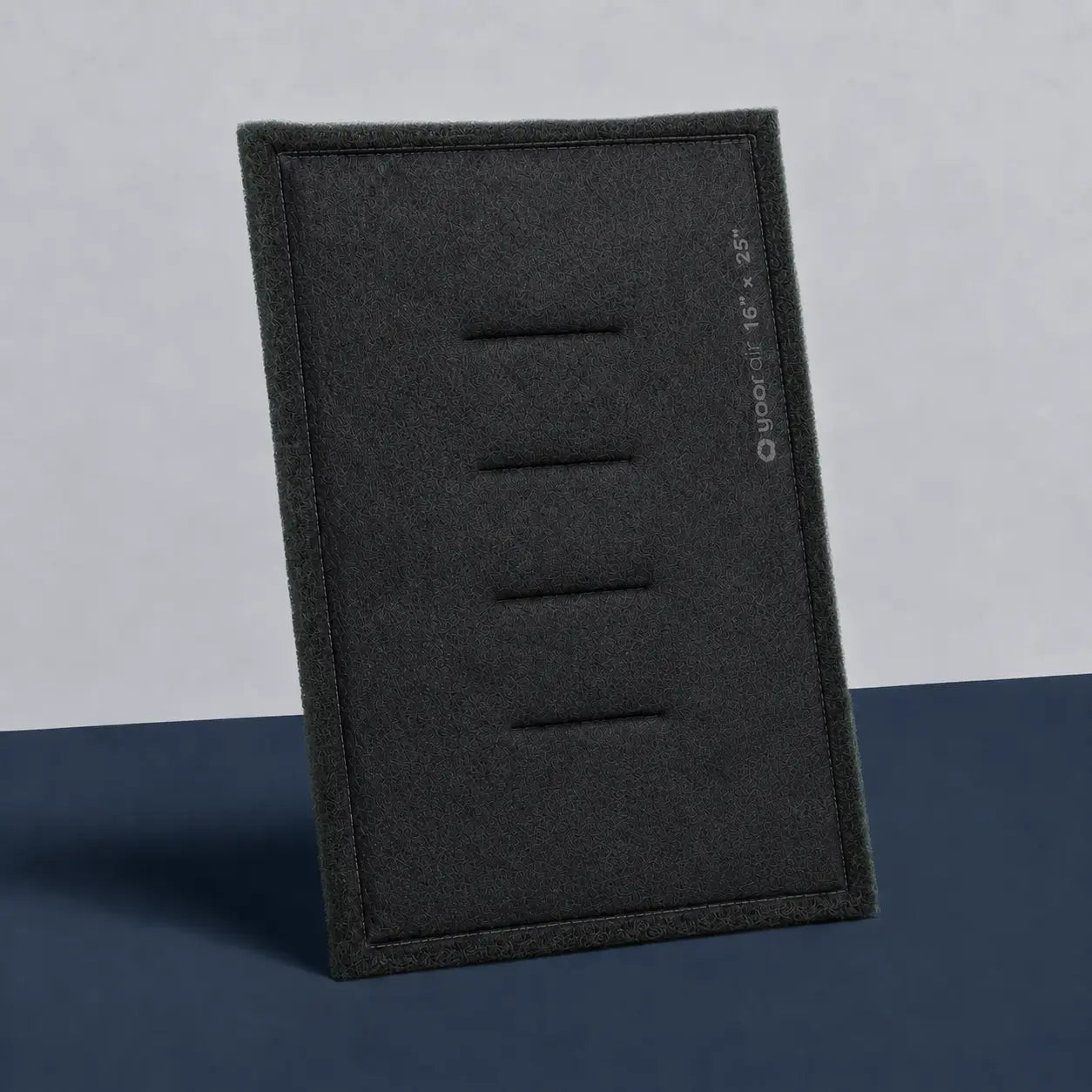
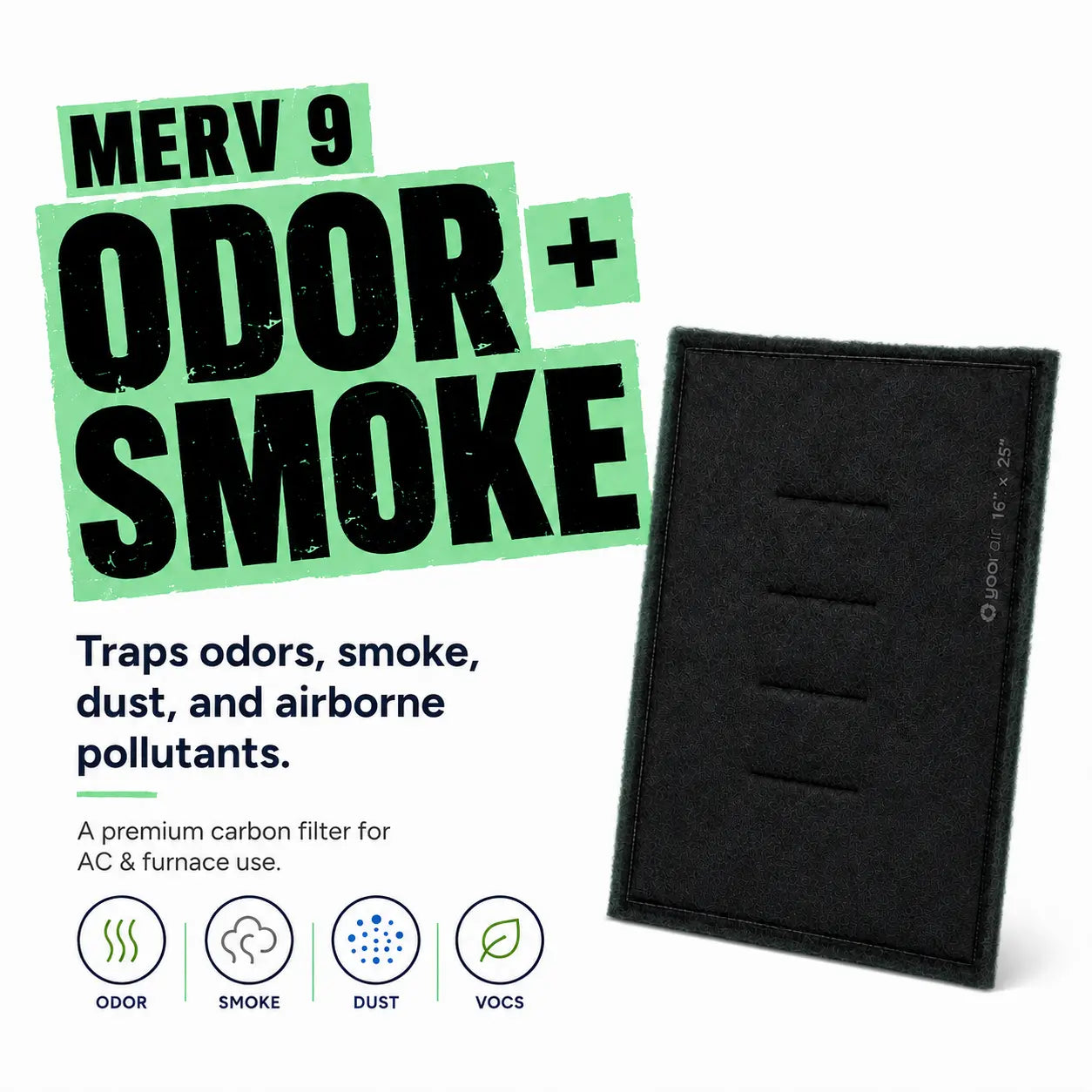

16x25x1 Pure Carbon | MERV 9 Air Filter
- Pro-level filtration helps trap dust, pollen, pet hair, and dander
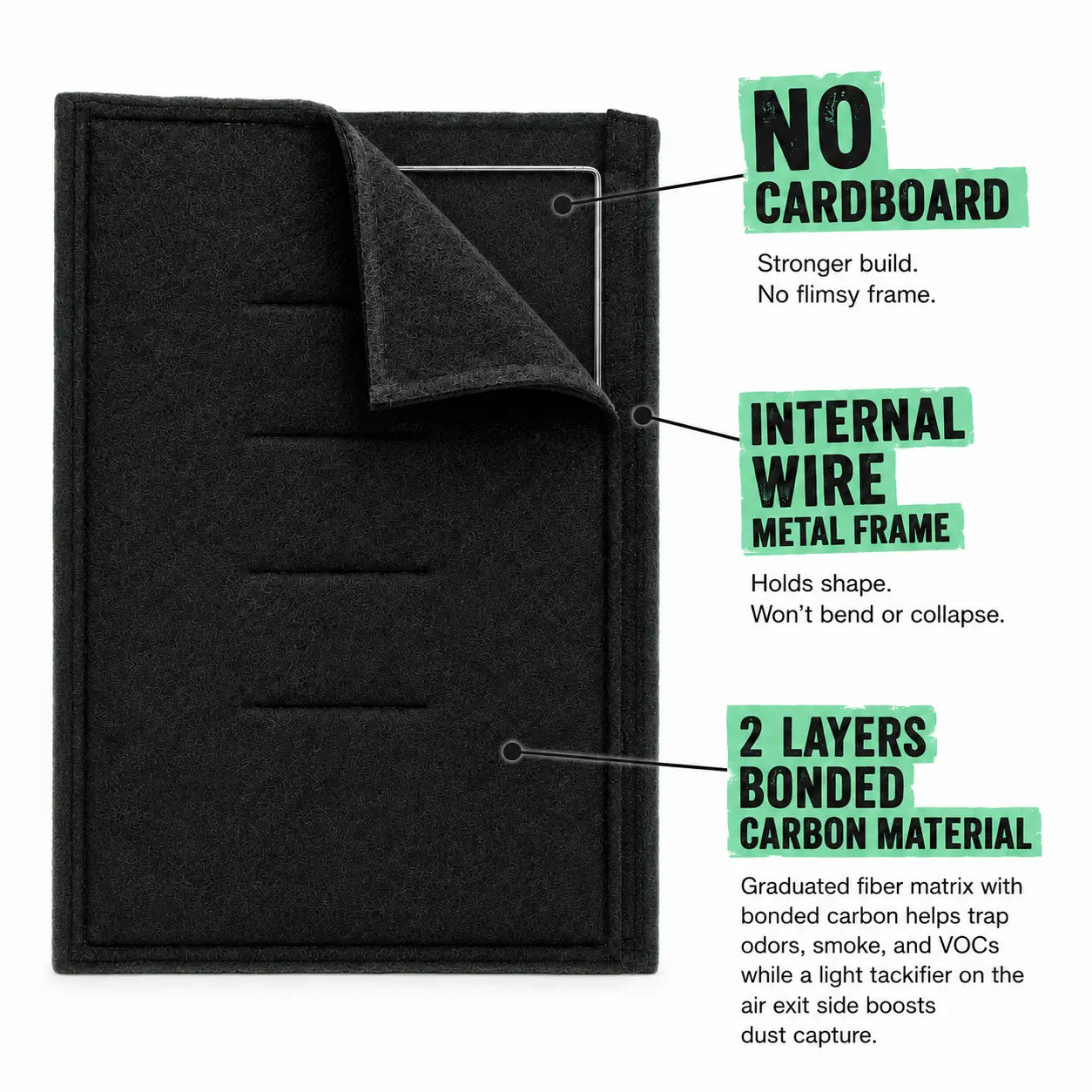
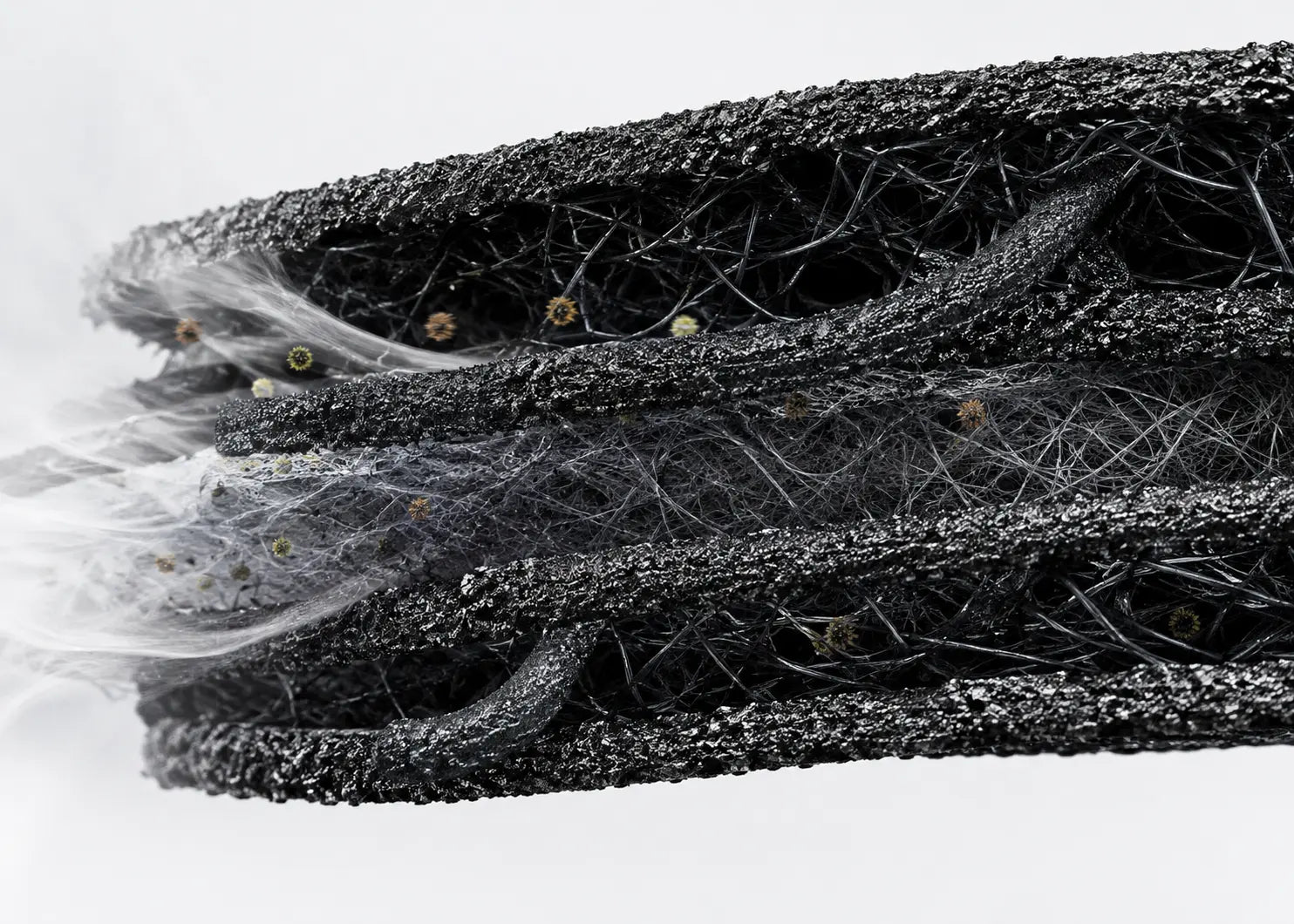
- Two layers of bonded carbon helps soak up pet, cooking, smoke, and chemical odors
- Sprayed-on application won’t shed carbon dust or settle like granulated carbon
- Tight where it counts, so dirty air has fewer places to sneak by
Finding the right HVAC air filter size might not sound exciting, but it plays a major role in how well your heating and cooling system works.
A properly sized filter helps maintain balanced airflow, keeps dust and allergens out of the air you breathe, and protects your HVAC unit from unnecessary strain.
Using the wrong size can lead to poor air quality, higher energy bills, and even long-term damage to your furnace or AC system.
Whether you're replacing an old filter, shopping for a new one, or just not sure what those numbers on the side of the filter mean, this step-by-step guide will help you figure out exactly what size you need, why it matters, and how to get it right the first time.
Step 1: Locate Your HVAC Filter
Before you can find your filter size, you need to locate where your air filter is installed. Most filters are found in one of these locations:
- Furnace: If you have a central heating system, your filter is likely located inside or next to the furnace unit. Furnaces are commonly found in basements, attics, garages, or dedicated utility closets.
- Return Air Vent: Some homes have air filters placed in large return vents, often located on walls, ceilings, or hallways. These vents pull air into the HVAC system to be heated or cooled.
- Air Handler Unit: If you have a split HVAC system, your filter may be inside the air handler, which is usually in a closet or attic.
If you’re unsure where to look, ask a family member who’s familiar with your home’s heating and cooling system - or check your HVAC user manual.

Step 2: Check the Existing Filter for Size
Most standard air filters have their dimensions clearly printed on the cardboard frame. Most filters are labeled using the standard width x length x depth format (example: 16x25x1). If you’re searching online, use this number to shop for replacement HVAC filters.
This nominal size (rounded for convenience) is what you’ll use when ordering a replacement filter. However, if exact measurements are needed, you can check the actual size—which is usually slightly smaller than the nominal size.
Homeowner’s [Pro HVAC Tip]: If your filter has a size printed on it, take a photo with your phone so you don’t forget it when shopping for a replacement. You can also store it in a folder on your phone so you aren’t endlessly scrolling to find it.

Step 3: How to Measure Your Filter Slot (If No Size is Listed)
If your old filter doesn’t have any size markings, you’ll need to measure it manually. Here’s how:
- Find a tape measure. (Trust us, it makes this process a lot easier.)
- Measure the width, length, and depth of the existing filter or filter slot.
- Round your measurements to the nearest inch to determine the nominal size.
Tip: If your measurements come out as 15 ¾ x 24 ¾ x ¾ inches, the correct filter size would be 16x25x1.

Step 4: Still Not Sure? Contact Yoor Air for Help
Still confused? No worries! Send a photo of your HVAC unit and filter slot to our support team. We’ll help you identify the correct air filter size for your system. Give us a call or fill out our contact form and we’ll guide you through the process of finding the perfect furnace filter size or AC filter size for your home.
Tip: If you’re having trouble, take a picture of your HVAC unit and filter slot before calling customer support. This can help them identify the right filter for your system.

Step 5: Choose the Right Filter for Your Home
Now that you know your size, choose the best air filter for your home’s needs. Filters come in different types based on efficiency (MERV rating) and air quality needs.
- Basic Filters (MERV 1-4): Good for airflow, but not great for dust or allergens capture.
- Standard Filters (MERV 5-8): Captures common household pollutants like dust, pollen, mold spores, and pet dander.
- High-Efficiency Filters (MERV 9-12): Ideal for allergy sufferers and homes with kids or pets. Many experts agree that most home systems should not use filters above MERV 12 unless it is a HEPA rated system.
- HEPA & Ultrafine Filters (MERV 13+): High Efficiency for trapping tiny airborne particles, but may restrict airflow in some HVAC systems.
Tip: If you have allergies or pets, consider a higher-efficiency filter to trap more airborne particles and improve air quality.
When to Change Your HVAC Filter (And Why It Matters)
Even the perfect filter won’t work forever. Over time, filters become clogged with dust, pollen, pet hair, and other airborne particles, making it harder for air to pass through.
When that happens, your HVAC system has to work harder to push/pull air through, which can lead to wear and tear, higher utility bills, and poor indoor air quality.
So how do you know it’s time to swap it out? Here are a few signs your filter might be overdue:
- You notice more dust collecting around vents or on furniture
- Your system is running longer than usual to reach the same temperature
- Allergy or asthma symptoms are flaring up indoors
- It’s been over 60–90 days since your last filter change
Still unsure? A quick visual inspection can help. If the filter looks gray or dusty, it’s time for a fresh one.
How Often Should You Replace Your Filter?
If you have pets, allergies, or live in a particularly dusty area, changing your filter every one to two months is recommended. For most households with standard HVAC usage, replacing the filter every two to three months is sufficient.
If you rarely use your heating or cooling system or always have windows shut when running the systems, you may only need to replace the filter up to every six months. To stay on track, write the replacement date on the filter or set a calendar reminder every 30–60 days.
Why the Right Filter Size Is Critical
You might be thinking, “How do I know what size air filter I need?” and “What happens if I use the wrong size?” Here’s why it’s crucial to get the correct fit.
A filter that is too small leaves gaps, allowing unfiltered air to bypass the system and circulate contaminants. This small gap can decrease your filters MERV rating by up to 2 ratings. Now your cheap MERV 4 is actually a MERV 2. A filter that is too large won’t fit properly and may get crushed when installed, reducing its effectiveness or possibly collapse entirely.
Risks of the wrong filter size:
- Gaps that let dirty air bypass the filter can decrease MERV rating
- Filter gets crushed or bent during installation
- Reduced airflow = higher energy bills
- Extra strain on your system = shorter HVAC lifespan
An improperly fitted filter can also restrict airflow, forcing your HVAC system to work harder, increasing energy costs, and shortening the lifespan of the unit. Selecting the right furnace or AC filter size helps maintain proper airflow, improves indoor air quality, and ensures your system operates efficiently.
Final Air Filter Size Checklist
Before purchasing a new filter, make sure you have identified the location of your HVAC unit and filter slot or track, checked your current filter for size markings, or manually measured if no size is listed.
Be sure you know how often your filter needs to be replaced and are ready to choose a filter that best suits your home’s needs. With the right filter, you can enjoy cleaner air, a more efficient HVAC system, and a healthier home.
Found your size? Shop Yoor Air's Pure series of filters for better protection against dust, allergens, and airflow issues.
Bigger packs lower your cost per filter. Stock up, save more, and keep your slot covered all year.
Description
Pure Carbon is the Yoor Air filter for homes where the air has started acting a little too confident.
It pairs MERV 9 filtration with premium bonded carbon, so it helps trap fine dust, pollen, pet hair, and dander while going after the smells your regular pleated filter lets walk right through like it owns the place. Pets. Cooking smoke. Chemical odors. Litter boxes. Stale air. Mystery funk.
Pure Carbon catches particles and helps soak up odors in one filter, because your furnace slot deserves something that can do both. Tight fit. Less dust. Less stink. No loose cardboard energy.
Product Specs
- Product Name: Pure Carbon Air Filter
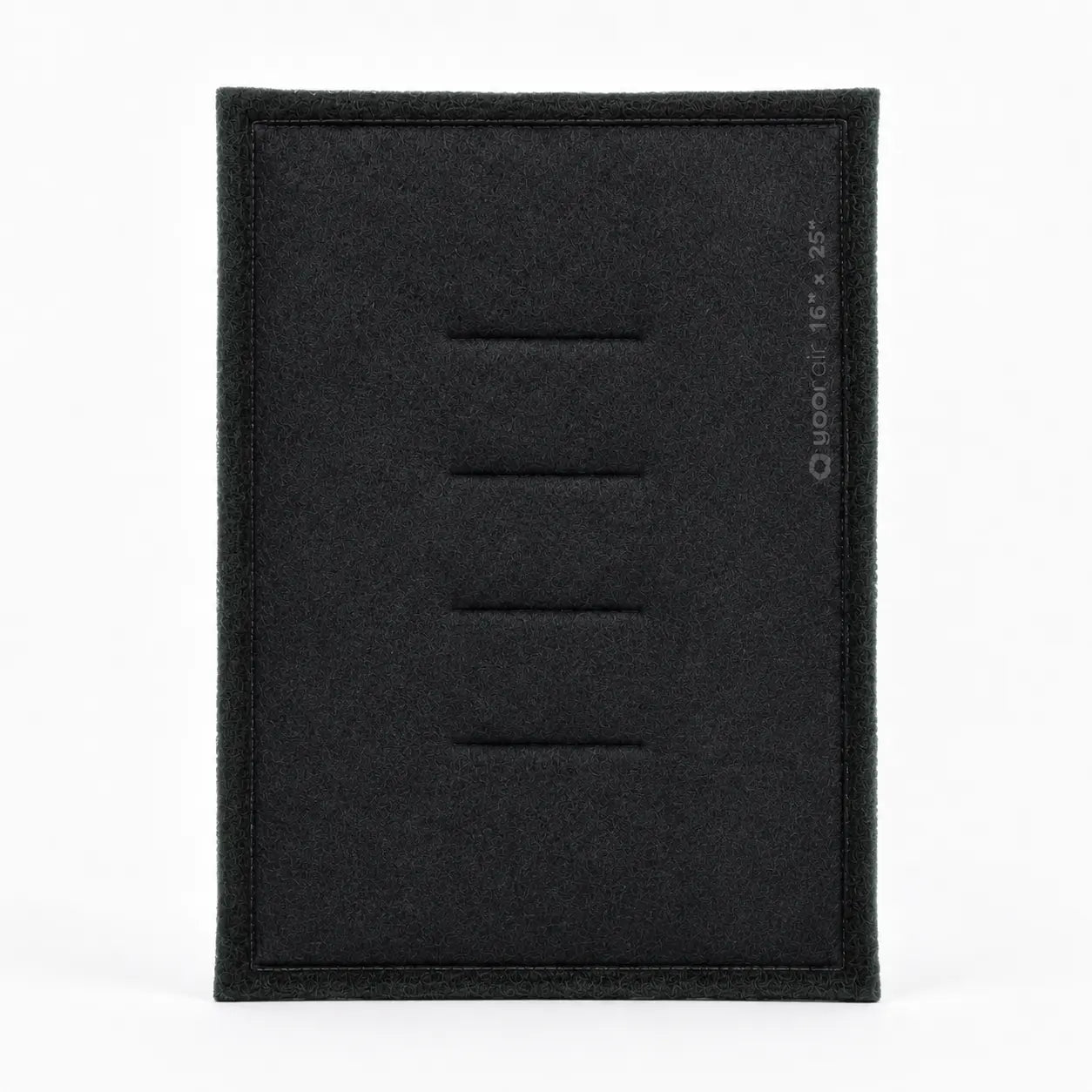
- Filter Size: 16x25x1
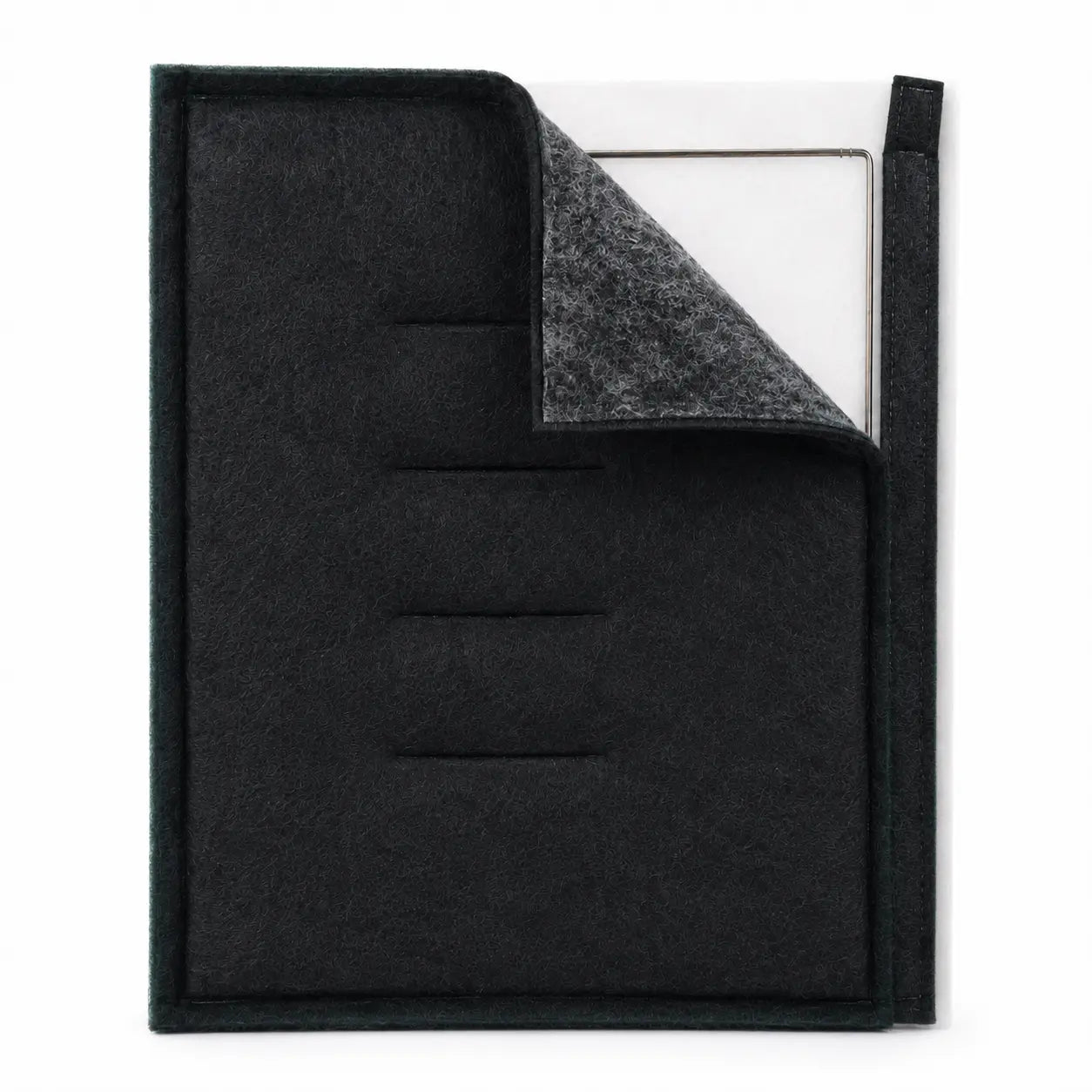
- Filter Construction: Synthetic Fiber Matrix Bonded with 2 layers of Pharmaceutical Grade, 100% Carbonized Basal Planes w/ Internal Wire Frame
- MERV Rating: 9
- Initial Resistance: 0.25” W.G. @ 295 FPM
- Best For: Homes with smelly pets, cooking odors, smoke, VOCs, everyday dust, pollen, lint, and anyone who wants cleaner air that smells as good as it feels
- Helps Capture: Smoke particles, household odors, dust, lint, pollen, mold spores, pet dander, dust mite debris, bacteria, virus carriers, and other everyday airborne particles while helping reduce unwanted odors
- Compatible Systems: Furnace, AC, HVAC, and return-air systems
- Pack Sizes: 1-12 filters
- Purchase Options: One-time purchase or subscription
- Recommended Use: Routine residential filter replacement
- Replacement Cadence: Every 1-3 months depending on home, system use, dust, and pets
Pure vs Pure Plus vs Pure Carbon
Pure
- Best for everyday dust protection
- Choose this if you want simple, reliable filtration for regular home maintenance, steady airflow, and fewer dusty little freeloaders floating around.
Plain English:
Pure is the everyday workhorse. It handles dust, lint, pollen, and routine crud without making your HVAC system work through unnecessary drama.
Pure Plus
- Best for stronger household filtration
- Choose this if you want more filtration power for dust, pollen, and everyday airborne debris.
Plain English:
Pure+ is for homes that need a little more muscle. More capture power with added Supertack tackifier, still homeowner-friendly, still not a boring cardboard rectangle pretending it’s special.
Pure Carbon
- Best for odor control plus dust capture
- Choose this if you have pets, cooking smells, stale air, or other nose crimes floating around your house.
Plain English:
Pure Carbon brings carbon filtration into the mix to help reduce everyday odors. Pet smells, cooking funk, stale air, mystery basement vibes. You know the type.
Will This Fit My System?
This 16x25x1 Pure Carbon Air Filter is made for compatible furnace, AC, HVAC, and return-air systems that use a 16x25x1 filter. Check the size printed on the frame of your current filter before ordering. If it says 16x25x1, you’re in the right place. If it says something else, don’t freestyle it. HVAC systems are picky little machines, and “close enough” is how you end up with dust sneaking around the filter like it owns the place.
Quick tip: Filter sizes are usually printed on the cardboard frame of your current filter. Check there first. Then order like a responsible adult.
Stop Forgetting Your Filter Change
Your HVAC filter is not supposed to become a dusty artifact from a lost civilization. Choose your pack size, set your delivery schedule, and get fresh 16x25x1 Pure Air Filters before the old one turns into a gray shame square. Subscriptions make regular replacement easy, especially if your system runs often, you have pets, or your house collects dust like it’s training for something.
Suggested delivery schedule:
- Every 1 month for heavy use, pets, extra dust, or high HVAC runtime
- Every 2 months for moderate use
- Every 3 months for typical home replacement
- Every 6 months if you’re stocking up and replacing manually
“Pure Carbon made my house stop smelling like dog, dinner, and whatever was happening near the laundry room.”
16x25x1 Pure Carbon | MERV 9 Air Filter
Two Filters in One: Traps Dust & Odor
Pure Carbon is what happens when a dust filter and an odor filter finally stop flirting and get to work.
The MERV 9 Pure Carbon media helps trap fine dust, pollen, pet hair, and dander before they keep floating around your home like they pay rent. The bonded carbon layer helps soak up cooking smells, pet odors, smoke, chemical smells, and stale air before your house develops a personality problem.
Dust gets trapped. Odors get handled. Yoor air stops acting nasty.


Tight Where It Counts
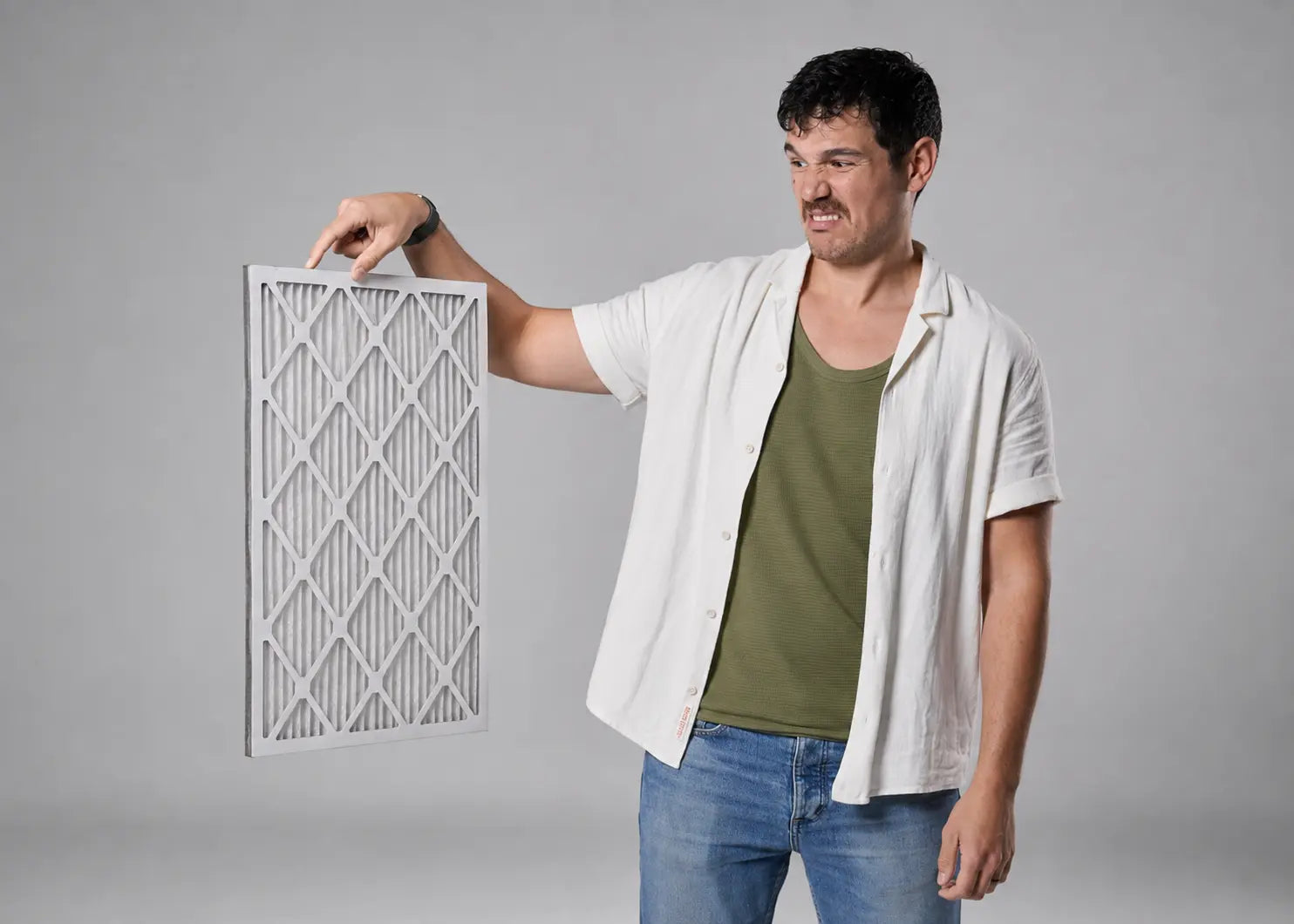
If your filter wiggles, dirty air is getting ideas. Dust, dander, pollen, pet hair, smoke particles, cooking crud, and whatever your dog dragged in can slip around the sides and head right back into your home. A loose filter might look like it’s doing the job, but dirty air knows when there’s a gap.
Pure Carbon is built for a snug, confident fit, so more air actually goes through the MERV 9 media and carbon layers instead of sneaking around it like a naughty little freak.
Benefits of Pure Carbon
More than a dust filter. Pure Carbon traps airborne junk and helps remove odors, so every room gets cleaner-feeling air without fake fragrance nonsense.
A regular pleated filter can catch some particles. Cute. Useful. Bare minimum. But Pure Carbon goes harder.
The dual bonded carbon layers help absorb the smells that come with real life: pets, litter boxes, smoke, cooking fumes, cleaning products, chemical odors, and stale indoor air.
No sprays. No plug-ins. No candle trying to cover up the crime scene. Just carbon where it counts.
A regular pleated filter sucks a absorbing odor. Pure Carbon does both! Catching the smallest dust particles and helping you annihilate the stink.
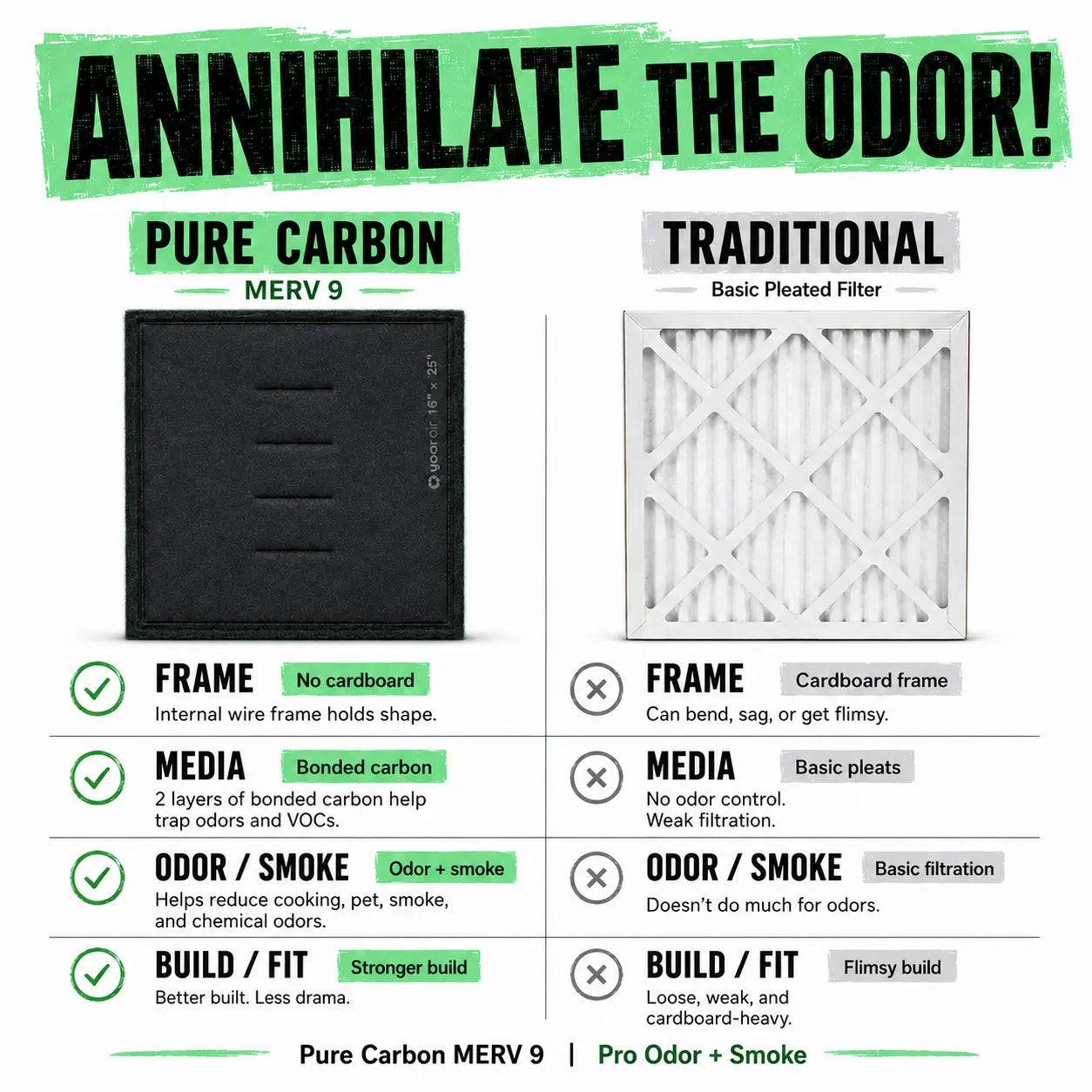
| Feature | Yoor Air Pure Carbon | Traditional Pleated Filter |
|---|---|---|
| Fit | Tight where it counts to help reduce dirty air bypass. | Can wiggle, has gaps, and lets dirty air sneak around. |
| Frame | Internal rigid wire frame to withstand real HVAC conditions. | Rating varies, and bypass air ruins the whole performance. |
| MERV Rating | MERV 9 filtration built for dust, pollen, pet hair, and dander. | Rating varies, and loose fit can wreck the whole performance. |
| Odor Control | Bonded carbon helps absorb pet, cooking, smoke, and chemical odors. | Usually does nothing for stink. Just sits there looking busy. |
| Carbon Layer | Sprayed-on carbon won’t shed or dust like cheap loose-bead filters. | Usually no carbon, no odor backup, no shame. |
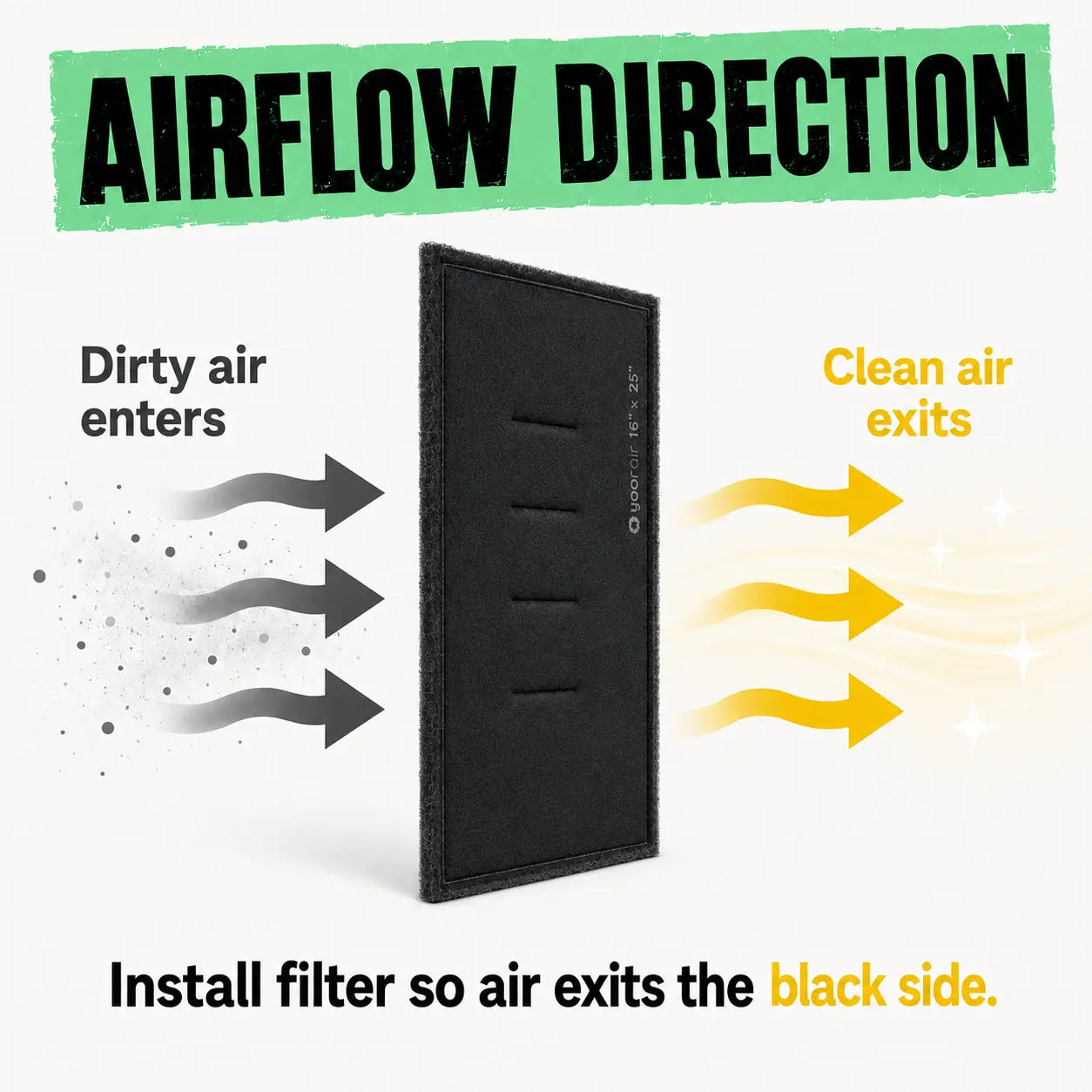
| Tackifier | Light Tackifier on Air Exit Side (A non-migrating adhesive coating to suspend trouble before it gets into the system). | Anything that can get through or around is not being stopped. |
| Pet Help | Helps trap pet hair and dander while reducing pet odors. | May catch some dander, but pet funk usually gets a free ride. |
| Cooking Smells | Helps absorb lingering kitchen odors, grease smells, and smoke. | May trap some particles. Smells still throw a party. |
| Smoke Odor | Helps reduce everyday smoke, fireplace smell, and stale smoky air. | Smoke smell usually walks right through like it owns the place. |
| Dust Capture | Captures fine dust before it keeps settling on your shelves and vents. | Captures some dust, depending on rating, fit, and how floppy it gets. |
| Airflow | Designed for steady airflow when replaced on schedule. | Can clog, whistle, sag, or restrict unevenly. Hot mess. |
| Replacement | Available once or on subscription before the funk comes back. | Replaced whenever someone finally remembers. Weak performance energy. |
| Overall Vibe | Built like it gives a damn. | Floppy cardboard situationship. |
YOOR S#IT DON'T STINK!

YOOR S#IT DON'T STINK!
Built to Trap the Odors Only Real Homes Deserve
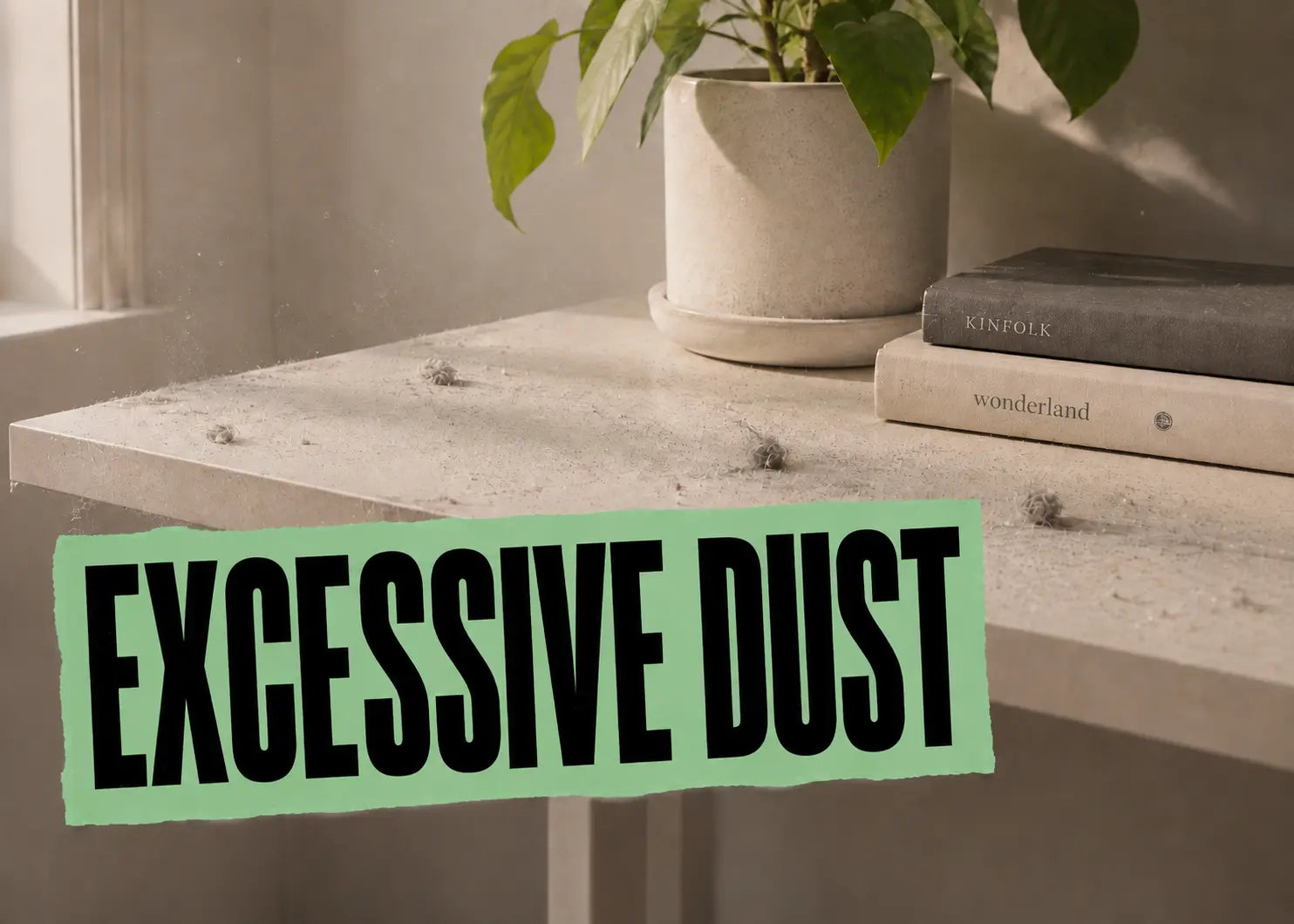
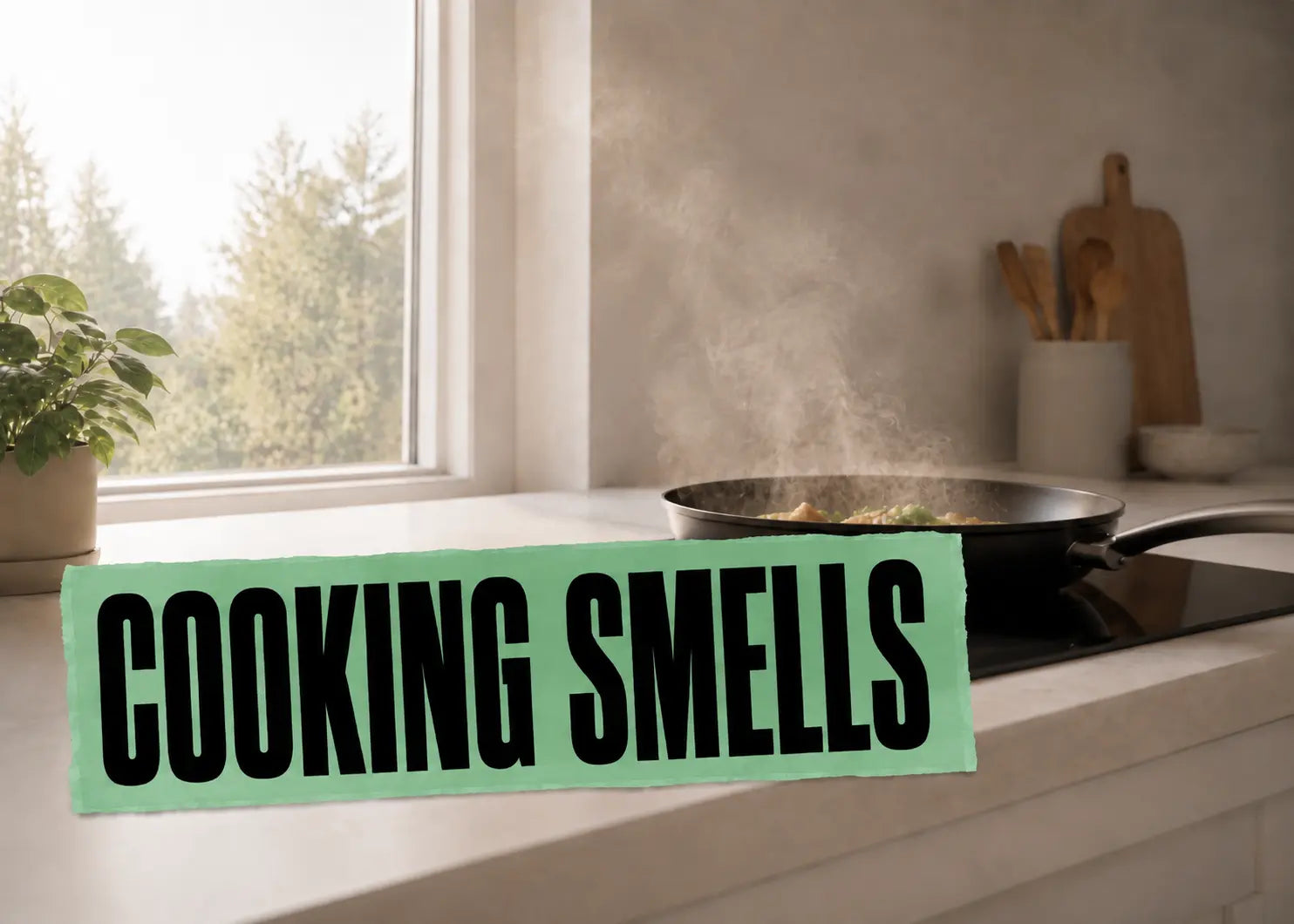
Your home is constantly making dust. Add pets, cooking, smoke, cleaning sprays, laundry, shoes, litter boxes, and closed-up rooms, and now your air is doing laps with a full backpack of gross.
Pure Carbon is a MERV 9 carbon filter built to catch airborne junk and help absorb the smells that keep cycling through your furnace, AC, HVAC, or return-air system.
Size matters. Fit matters. Dirty air loves a loose situation. Pure Carbon closes the gap and fights the funk.



MERV 9 Hits the Sweet Spot
Bigger isn’t always better. Some filters crank the MERV rating so high they start choking airflow and making your HVAC system work harder than it needs to. Congratulations, now your furnace is wheezing in the basement.
Pure Carbon uses MERV 9 filtration because it gives you stronger particle capture for fine dust, pollen, pet dander, pet hair, and airborne crud while still being designed for steady residential HVAC airflow.
Then the carbon layer steps in for the stink. Particles get trapped and odors get grabbed. Your HVAC doesn’t regret the relationship.
Strong enough to catch the crud. Not so tight your HVAC files a complaint.

How Bonded Carbon Beats Bad Odors
Bonded carbon works like a tiny odor sponge. As air moves through the filter, odor molecules stick to the carbon instead of blowing back into your home and making another lap through the living room.
Pet odors. Litter boxes. Cooking smoke. Cleaning product smells. Chemical odors. Stale air... The carbon helps grab those smells before they keep recirculating like they own the place.
Our carbon is made with incredibly fine particles, giving it more exposed surface area where fast-moving air can actually make contact. Cheap carbon can hide too much of its usable surface deep inside, where air barely gets a chance to touch it.
More surface out in the open means more odor-fighting action in the split second your air passes through. Tiny carbon. Big performance. No weak finish.
Better for You. Better for Your Home. Built Better. Period.
Built to Last
Your furnace works hard. Your filter should too. Yoor Air filters are built with stronger materials that resist bending, sagging, and the limp cardboard nonsense that can leave your HVAC system working harder than it needs to.
Built with Purpose
Every part of a Yoor Air filter has a job to do. From the frame to the filtration media, we designed it to fit better, last longer, and help keep the junk where it belongs. In the filter. Not floating around your house.
Made for Real Homes
Life gets messy. Dust, pollen, allergens, odor, smoke, and everyday junk don't take days off. Our filters are built to handle real homes with a better fit and durable construction that helps keep your HVAC system doing its job.
Don’t Wait Until It’s Fully Loaded
A typical 1-inch carbon filter can run about 60 to 90 days, but homes with pets, smoke, heavy cooking, allergies, or stale air play by filthier rules.
Here’s the thing: carbon can tap out before the filter looks disgusting.
The MERV 9 media may still look like it has life left, while the carbon layer is already done grabbing odors and quietly questioning its choices. If pet smells, smoke, cooking odors, or chemical smells start creeping back in, change it.
Easy Test: Pull the filter out and check it. If it looks fully loaded, clogged, gray, or like it’s been living behind a dryer since 1999, don’t negotiate with it. Swap it out!
Even the good ones need to pull out eventually ;)
| Home Situation | Suggested Replacement |
|---|---|
| Typical home use | Every 60 to 90 days |
| Pets in the home | Every 60 days |
| Heavy cooking odors | Every 30 to 60 days |
| Smoke, fireplace smell, or stale rooms | Every 30 to 60 days |
| Allergies or sensitive noses | Every 30 to 60 days |
| Pets plus sensitive air needs | Check monthly, replace every 4 to 6 weeks |
| Odors start coming back | Replace it now |
| Heavy HVAC use | Check monthly |

Your Filter Should Fit Just Right
A filter that almost fits almost works.
Too small? Dirty air finds the gap. Too big? Now you’re cramming filter material into your furnace like a maniac.
A properly sized Pure Carbon filter helps reduce dirty air bypass, so more air goes through the MERV 9 media and bonded carbon layer instead of sneaking around the sides.
Wrong size = weak performance
FAQs
What does an bonded carbon air filter do?
A bonded carbon air filter helps remove odors and gases from your air.
The carbon works like a sponge, grabbing smelly molecules from cooking, pets, smoke, cleaning products, and chemical odors as the air passes through (Adsorption!).
Pure Carbon also uses MERV 9 media to trap dust, pollen, pet hair, and dander, so it helps clean both particles and smells.
Two jobs. One slot. Respect.
Do carbon air filters help with pet odors and household smells?
Yes. Bonded carbon is great at absorbing odors, including pet smells, litter box odor, cooking fumes, smoke, and stale indoor air.
As air flows through the filter, the carbon helps trap those odor molecules instead of letting them recirculate through your home like a bad roommate.
Your pet can keep the love. The filter can handle the evidence.
Do carbon air filters help with allergies and dust?
Carbon targets gases and smells, not solid particles.
That’s why Pure Carbon pairs bonded carbon with MERV 9 media. The MERV 9 layer captures fine dust, pollen, pet hair, and pet dander. The carbon layers help reduce odors.
Together, they handle more than a basic filter.
No medical miracles. Just better filtration and less airborne nonsense.
How often should I replace a carbon air filter?
A 1-inch Pure Carbon filter should usually be replaced every 60 to 90 days.
Swap it sooner, around every 30 to 60 days, if you have pets, allergies, smoke, heavy cooking odors, strong chemical smells, or odors start coming back.
Carbon can lose its odor-fighting power before the filter looks dirty.
Sneaky, but true.
Do carbon air filters restrict airflow or strain my HVAC?
A properly sized MERV 9 carbon filter is designed to keep normal airflow moving in standard residential HVAC systems.
The real airflow killer is a clogged filter, not the carbon itself.
Pick the right size, replace it on schedule, and don’t let your HVAC fight through a dusty, overworked mess.
What makes Pure Carbon different from a regular pleated filter?
A regular pleated filter mostly catches particles though can let dirty air bypass around the frame.
Pure Carbon catches particles with MERV 9 media and adds bonded carbon to help reduce odors from pets, cooking, smoke, cleaning products, and stale air.
Regular pleated filters can be fine for the dust it can catch.
Pure Carbon is for homes with dust and stink trying to team up.
What makes sprayed-on carbon better than loose carbon granules?
Sprayed-on carbon stays attached to the filter media.
Loose carbon granules can shift to create "dead spots", shed, or create dust. Nobody needs carbon confetti in the HVAC system.
Pure Carbon keeps the carbon where it belongs, so it can help adsorb odors without making a weird little mess.
Is Pure Carbon good for cooking smells?
Yes. Pure Carbon helps reduce lingering cooking smells from garlic, onions, bacon, grease, smoke, burnt toast, and whatever happened in the pan.
It won’t make you a better chef.
It can help your house recover faster.
Is Pure Carbon good for smoke odors?
Bonded carbon can help reduce everyday smoke odors and some gas-phase smells. MERV 9 media can also help capture certain smoke-related particles.
For heavy wildfire smoke or major smoke exposure, use dedicated air purification too.
For everyday smoke smell, fireplace odor, and cooking smoke, Pure Carbon is a smart upgrade over a standard pleated filter.
Will Pure Carbon make my house smell scented?
No.
Pure Carbon doesn’t add perfume, fake lavender, ocean breeze, mountain mist, or any other candle-aisle nonsense.
It helps reduce odors by absorbing smell molecules with bonded carbon.
Cleaner-smelling air without spraying perfume over the crime scene.
Can Pure Carbon replace candles, sprays, and plug-ins?
Pure Carbon helps reduce odors closer to the source by filtering air through your HVAC system.
Candles, sprays, and plug-ins usually cover smells. Pure Carbon helps adsorb them.
Keep the candle if you like the vibe. Just don’t make it do the filter’s job.
Does filter size really matter?
Yes. Size matters.
A filter that’s too small can leave gaps, and gaps let dirty air sneak around the sides. Bypassed air is basically unfiltered air taking the easy way out.
Too big can crush, bend, or create airflow problems.
Check your size before buying. A snug fit helps the filter do its job instead of just looking busy.
What happens if my filter fits loose?
A loose filter can let dirty air bypass the media.
Dust, dander, pollen, odors, and airborne crud may slide around the filter instead of going through it.
If it wiggles, dirty air is getting ideas.
Find the right size, cover your slot, and stop giving dust a side entrance.
Can I subscribe to Pure Carbon filters?
Yes.
Subscriptions help keep fresh filters coming before your old one gets fully loaded, tapped out, and emotionally unavailable.
Choose your size, pick your delivery schedule, and let Pure Carbon show up before the funk makes a comeback.
A 16x25x1 air filter is a common size for residential furnace, AC, HVAC, and return-air systems, and the Yoor Air Pure Carbon Air Filter is built for homes that need dust control and odor defense in the same slot. This MERV 9 bonded carbon furnace filter helps trap fine dust, pollen, pet hair, and pet dander while bonded carbon helps reduce cooking smells, smoke odor, pet odors, chemical smells, litter box odor, and stale indoor air. Pure Carbon uses sprayed-on carbon that won’t shed or dust like granulated carbon filters, plus a snug-fitting design that helps reduce dirty air bypass, because size matters and a loose filter is basically dust with extra steps. It’s made for steady airflow, cleaner-feeling rooms, less household funk, and regular HVAC maintenance that doesn’t require becoming a furnace nerd. Choose pack sizes 1 through 12 or subscribe so fresh filters show up before your old carbon filter gets fully loaded and starts giving weak performance.